Showing posts with label online agents. Show all posts

Wednesday, March 24, 2010

Over-heard at NoVacancy: tweets and chatter from No Vacancy hospitality conference 18 March 2010

Innovation, Distribution, Inspiration @ No Vacancy 2010
Normally it is the end of the year that signals the conference season with TRAVELtech, WebInTravel and PhoCusWright following each other month by month starting in September (note - TRAVELtech is Aug 31 this year rather than usual Sept). But for the BOOT this year the season has started early with adtech, No Vacancy having just wrapped up and Eyefortravel TDS Asia coming up in Singapore on April 28 and 29.

Last week was my first year at No Vacancy. It is part of the same conference stable as Martin Kelly's SearchEngineRoom and TRAVELtech and is targeted at the hospitality industry - all channels - rather than being a purely online or technology conference. I (and others) tweeted our way through No Vacancy under the hashtag #novacancy. Not all of you are on twitter so here in this post are some of the top tweets and quotes I took away from No Vacancy. Here are the the most interesting tweets:

On the market general (Australian bias)
  • 2009 hospitality market in Australia according to Dransfield."held up better than expected" "rates down 3%" "revpar down 8.2%". 2010 "good start, expect rate increases" but " lost 40% of capital globally" "another shock could come" They went on "Credit availability + bank conservatism means still shortage of capital" "has hit valuation "av hotel down 20% value"
  • Travelclick" gds htl vol in 2009 46mm trans, to 2003 levels". Wonder how much corp bookg decline, how much OTA neg rate growth?
On Online Agents and Intermediaries
  • Robbie Cook (Wotif CEO) said "60% of business is direct to site, then organic search, paid is a single digit % of the business". He went on to say that "Wotif saved $2.2mm in costs post travel.com.au business post acquisition."
  • Yury Shar Hotelscombined said that "less than 10% of traffic comes from typing in URL direct" "59% of traffic affiliate. Paid 24%, rest organic search" Sam_Linder added in his tweet "@hotelscombined 2 mil visitors pm to 6 mil in last year. Affiliates is primary channel, 15,000 such as skyscanner in uk"
  • Latest stats from stayz.com.au "22,400 properties, 270k newsletter subs, 160k bkings/ 650k nts in 2009 (+ 30%yoy)" also advertising revenue
On Hoteliers
  • Starwood AsiaPac "2009 -2% in occupancy, -7% ADR for -9% RevPAR in Pacific" "online only channel to grow- branded faster than OTA"
  • Starwood "2-3 years to get back to 2007 rate levels" to which robertkcole said "Sorry, Starwood's dreaming if they think it will only take 2-3 years for rates to return to 2007"
  • Accor AsiaPac "Occ finished 2009 at 74%. Good but down from all time high in 2007" "price down 6%" revpar down 9%"
  • Accor "Online up from 10% of sales in 2005 to 35% planned for 2010" "65% of online sales will be direct up from 50% in 2005"
  • Accor "happy with 65% of online business being direct. Won't artificially cap 3rd party distribution or hold back inventory"
Other accom types
  • 25-46% of bookings online at "freespirit" (a holiday park/caravan park company). If true for whole sector then parks online larger percentage than hotels

Sunday, March 14, 2010

Agoda's 2009 Turnover / Bookings was US$244 million (according to Citigroup)

I am always on the watch for Agoda results here are the BOOT as they have been hard to find. You will have seen the stellar results for Pricline in this announcement and elsewhere, showing >50% growth in Q4 09 over 08. In the transcript from the earnings announcement I could not find any details about Agoda's contribution to the performance. Finally, via CitigroupGEO we have an estimate on Agoda's turnover and gross bookings. Here is a table with the last 6 quarters of results for Agoda estimated by Mark S. Mahaney of Citigroup (link to PDF here)

Means Citi estimated Agoda generated $244MM in bookings/turnover in 2009 (3% of Pricline's total). Up 100% on 2008. Q4 2009 was estimated at US$78mm up 111% on Q4 2008. Other information from the note:
  • Confirmed purchase terms. Acquisition in 2007 for $16MM in cash
    and an earn-out of up to $142MM, payable in 2011 upon Agoda reaching
    undisclosed Bookings and Earnings targets in 2010.
  • Strongest search engine ranking markets - China, Hong Kong, Japan, South Korea, Singapore, and Thailand. Weakest - Australia, India, and New Zealand.
  • Projects Agodas gross bookings at $433mm in 2010, $606mm in 2011 and $758mm in 2012; and
  • Models and aggressive scenario where $1bb in gross bookings for Agoda is possible in 2011 if online hotel penetration in APAC increases from 25% to 37.5% and Agoda;s share of the market increases from 3.5% to 6%.
This Citi report is the most detailed analysis of Agoda I have seen to date. Definitely worth a read.

Wednesday, February 17, 2010

AsiaRooms: TUI A&D division generates no profits in Q4 of 2009 but AsiaRooms conversion on the improve

Here at BOOT central we try to collect and collate information on Asia's online travel companies. One of those we are tracking is AsiaRooms, the Pattaya based online hotel company owned by the European travel giant TUI. As reported last year AsiaRooms is incorporated into the LateRooms part of TUI.

In May 2009 I managed to collect some information about the performance and results for the TUI Online Destination Services group - which included AsiaRooms, LateRooms, Hotelopia, Hotelbeds and a dozen offline destination brands. The group was renamed the TUI Accomodation and Destination (A&D) division in the second quarter of 09. With the new name comes with a slight realignment of brands and sub-divisions into the following.

B2C Division: LateRooms and Asiarooms.
B2B Division: Hotelopia, Hotelbeds, Holidays Services and TUI Espania
A&D Specialist Division: Intercruises, Aeolos, Pacific World, TUI China

I read this as a greater separation of the operations of the combined LateRooms/AsiaRooms and the other "online" businesses of Hotelopia and Hotelbeds. While the focus of the BOOT is on the B2C group it is worth noting that the A&D section of TUI is big business generating more than £552mm per year in Revenue and more than 8,000 employees. (one page pdf factsheet on the A&D division here)

Last week TUI published their results for the quarter to 31 Dec 2009 (pdf here). From it we can collect another little piece of information on the online activities of TUI and AsiaRooms turnover. Here's what the announcement says
"The A&D sector reported an underlying operating result of £nil (Q1 09 profit £1m) due to foreign exchange translation losses. Profitability in our Online B2C business improved due to better conversion rates in Asiarooms following its switch from a merchant model to a commissionable model. This was offset, however, by reduced volumes in our Destination Services business in Spain."
In one paragraph it is only AsiaRooms out of some dozen or more brands that gets a mention. Nothing specific enough for us to tell whether or not AsiaRooms is profitable or not but they are celebrating conversion improvements. Any other information you have on AsiaRooms?

Monday, February 1, 2010

Tnooz: The blurring lines between transactional and non-transactional sites

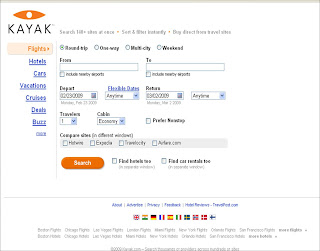
My latest post for Tnooz has is live. Title of the post is "Non-transactional travel sites are chasing the online agents on unique product hunting – but can it work?". I write about how content sites are starting to negotiate directly with suppliers for unique product offerings, trying to directly challenge the major online travel agents. Mentioned in the post are Kayak Private Sale, TripAdvisor Business Listings, Voyageprive, Jetsetter, Dealbase and Totaltravel.

You can read the full post here.

Tuesday, January 12, 2010

Kayak Private Sale: Surely to mean increased cost and complexity for Kayak. A zero percenter no more

Dennis Schaal over at Tnooz broke the story that Kayak is launching a program called Kayak Private Sale. In a post titled "Kayak gets clubby with exclusive hotel deals" he revealed that Kayak is planning on launching exclusive deals. These deals will be negotiated directly with a property and made available for Kayak exclusively. A few days later Dennis had an update in his post "Kayak exclusives to include flights, hotels, vacation packages" including confirmation that these exclusives would extend to flight and packages as well as hotels. Bookings will be at the supplier site based on a click/referral from Kayak.

This is a very interesting step from Kayak - but not for the reasons you first think. In the words of PhoCusWright boss Phillip Wolf one of the hallmarks of Kayak's success was that it was a "zero percenter". That is a site where zero (or near zero) percent of the site content is controlled or produced by the owner. The main disadvantage of being a zero percenter is that you don't control inventory, price or the customer experience. The main benefit of being a zero percenter is the dramatic operational cost advantage you have over an online retailer. No need for a supplier contracting team as a small biz dev team is enough to secure content. No need for a fulfilment team as the supplier/advertiser takes the booking. No need for a customer care team as the supplier/advertiser talks to the customer. This saves millions in costs. This is how you can be one of the biggest travel sites on the planet but with less than a 100 staff (last time I heard).

But (as I said in my comment to Dennis' first post) signing and managing exclusive deals takes time and a team. Call it a revenue management team or a hotel market management/contracting team. Either way it is a group of sales and revenue professionals who need to talk weekly/daily to suppliers. In the OTA world this means local market people - lots of them. Plus if you are going to load exclusive deals you are going to need to talk to consumers when those deals are not what they are supposed to be. This means more people which means higher cost. All of this adds up to a significant operational and cost change for Kayak

I am looking forward to seeing how this plays out. Am I missing something?

Monday, January 4, 2010

Agoda and Booking start to integrate inventory - first steps

Thanks to a reader who sent through a screen shot of the search results from a Booking.com page for a secondary destination in China. The page shows 15 Booking.com contracted hotels at the top of the sort order then a line/marker that says
Hotels below are offered by other companies in the Priceline Group
Below this line is a list of hotels in the same destination but provided by Agoda not Booking.com. A click on one of those pages sends you to the Agoda booking system (ie link relationship and white label not full inventory integration).

This is the first hint of integration between the Priceline owned Asian based Agoda and Euro based Booking.com. This is not a full back end integration like we have just seen for AsiaRooms and LateRooms. Mainly because it will be much harder with Agoda and Booking operating on different models (merchant vs commission) and I think that Agoda's owners are still in the earn out process part of the sale to Priceline. When the sale was announced in 2007 the earn out period was listed as three years. Integrations during earn outs are hard as the business working under the earn out is completely focused on achieving the earn out targets rather than internal integration needs. As the earn out period starts to close (ie end of this year), I expect to see even more integration between the two businesses.

Here is a screenshot of the search (Zhuhai China)

Sunday, January 3, 2010

More Expedia display trials - defaulting to hotel search in Australia

Late last year I shared with you a screenshot showing that Expedia.com.au were trialling a Wotif list like display for hotel results. With the new year I can see that they are trialling a new home page with larger widget and hotels as the default for search. First sale of the year is a 50% off hotels. Is Expedia giving up on Air in Australia? Screenshot below.


Monday, October 19, 2009

3 + 3 recommendations on how offline travel can save itself

I remain stunned how often I still read announcements from large off-line travel agents (in Australia, Asia and elsewhere) saying that they don't need to worry about competition from online players.

Just recently in separate reports leaders of two of the largest in the Pacific region reaffirmed their online travel disinterest.

Peter Lacaze is the CEO of Stella Travel. One of the Pacific's largest network of offline franchise travel agents, corporate travel and wholesale/consolidators. Lacaze is confronted with a lot of challenges. Today he announced plans to cut franchise fees and other measures to retain stores/members. Despite the challenges to his business, he does not believe online is the answer. In fact he has gone beyond just ignoring online to being positively negative on it. In a recent TravelTrends post he said “not in my lifetime” in response to a question about the internet taking over half the market in Australia. I am not sure what market or stats he is looking at. The online domestic air business is already above 50% and online hotels are in the 30% range. PhoCusWright (in their recent APAC report) say that 26% of leisure and unmanaged business travel spend is online in Australia (2008) set to rise to 41% in 2011. At this sort of pacing more than half of the spend will be online before the end of the next decade (as it already is in the US)

Graham Turner (Lacaze's rival over at Flight Centre) continued the "denier" talk during the presentation of his FY09 annual results (see TravelToday pdf here). Telling the audience and media how little he was worried about online travel companies and that they were not a threat to his business.

How to get serious about online

I regularly write stories on this continued denial by the off-line players. In response I am often asked by email and at conference either "how would you know if the online companies 'got it' and started a real push into online?" or "what would you tell an off-line CEO that he/she needs to do to be serious about online?" The answer to both questions is the same. There are three things that players like Stella and Flight Centre need to do right now to take online seriously:
  1. Hire a new person and restructure: Appoint a senior exec to be the boss of online. Critically they need to report direct to the CEO and be free of any "cannulisation hand-cuffs". That can buy, invest and drive online without fear of the sales taken away from the store-front;
  2. Set a specific Target: Make a company aim and shareholder commitment of a number of transactions (or dollars) that will come in from online bookings by a certain date; and
  3. Embrace Technology: Accept the fact that technology is critical to selling travel well. Hire a team of developers (or do a deal with a technology company) devoted to online only activities, reporting to the new online boss.
How to revitalise off-line

To be fair, I do not expect a 100% off-line company to become a 100% online company. Therefore I am going to add three more recommendations on how off-line players should use technology to protect their existing business and stay relevant to consumers looking to fulfil their more complicated itineraries off-line and therefore protect their revenues from complex itineraries. They are:
  1. Destination Experts/Complex Product Methodology: Brochures and Famil trips are not enough to provide off-line agents with the level of information they need to sell complex itineraries to consumers better than the web. To effectively compete with the scale of information online, off-line agents need to be able to add their skills to a deep content library of destination information and a discovery and recommendation system to help sort through all that is available;
  2. Massive CRM investment: Off-line agents get to see their customers, online don't. This means that off-line agents can make decisions about purchase intention and consumer activity that online can't. Also means they can ask more detailed and targeted questions about consumers than off-line. This improved access to information on consumers is currently wasted by the major off-line agents because they either don't collect it, or if they do, they don't know what to do with it. I recommend a massive investment in a CRM systems tied to the desktop sales tools and to the incentive plans for staff; and
  3. Rewrite store experience (copy the supermarkets): The travel agency store layout has not changed in my lifetime. The rows of brochures in no particular order with deal led window displays look the same today as they did in the 70s, 80s and 90s. Meanwhile other retail organisations (especially supermarkets) have invested heavily in consumer retail pattern research and store layout. The location of items, stores and promotional spaces has become a science. All designed towards bringing the customer to the store, keeping them inside the store and directing their purchasing behaviour. Travel companies have to do the same. They need to rewrite the consumer experience to make more of the merchandising opportunities offered by access to customers walking around with their wallets in the pockets.
The other view is that it is too late to save the offline players. What do you think? Too late? Answers in comments

thanks to salinadarling at flickr for the great photo

Sunday, October 18, 2009

Gnome Speaks: Sam Gilliland Interviewed in Dallas News

With Travelocity private and execs being very quiet of late, is has proven harder and harder to find out what is going on at the land of the gnome. The Dallas News has a two part interview from Sabre Holdings CEO Sam Gilliland. Highlights from the interview are:
  • On sales to forecast: "...in terms of our planning we've come out basically even" - meaning leisure travel sales growth has offsett steeper declines in corporate travel;
  • On marketing: "...I'm imagining we'll spend up" - meaning that he doesn't have to disclose how much he spends on marketing but will tell us that he is spending more than last year;
  • On 2010 plans: "We're investing a lot in the hotel sector" - meaning that the airline sales business continues to be only borderline profitable
  • On private vs public future (ie IPO): "It will depend a lot on where the market is and where the economy is, but I do also think that we'll be looking for revenue growth before we do it," - means no timetable or immediate plans
thanks to B Tal over at flickr for the gnome shot

Saturday, October 3, 2009

AsiaRooms and LateRooms complete merger of operations - my guess from reading between the lines

Here at BOOT central (even while on holidays) we are always on the look out for information about the TUI owned AsiaRooms. After my (relatively) recent interview with AsiaRooms marketing boss John Fearon I started to compile as much info as I could about AsiaRooms as other companies in the TUI Online Destination Services Group including their new push into direct hotel contracing and the commission model. Recent news seems to say that the next piece in the AsiaRooms puzzel is a complete integration with stablemate LateRooms (of Manchester).

I have picked up is more information on executives and team numbers on AsiaRooms care of an update from Siew Hoon at the WebInTravel website called "“Bad boy” no more, AsiaRooms moves to commissionable model". I recommend you read Siew Hoon's interview with LateRooms boss (and therefore AsiaRooms boss) Chris Morris but let me walk you through a highlight from the interview and how it led me to conclude that LateRooms and AsiaRooms are now one.

First to the highlight - we now know the name of person in charge of leading AsiaRooms into the direct to hotel contracting business. According to the interview Kathy Gwinnett will head up contracting as Hotel Relationships Director – B2C Division. She will be backed up by a team of 25 in Asia. Not clear if all contracting staff or have a mixed contracting, database and content role. Also not clear yet where the commission collection group will be run out of. Gwinnett (according to her linkedin profile) is a long term LateRooms employee (8 years) and is Manchester based. Looks like she is heading up a combined AsiaRooms and LateRooms hotel contracting team.

Second to the conclusions - I think this interview makes it very clear that the LateRooms and AsiaRooms business have been fully merged. I draw this conclusion not only from the shared staff members but also from a recent technical glitch at AsiaRooms which resulted in the AsiaRooms website pointing to a LateRooms error message page (c/o the franz). Finally (and conclusively) the sort order results for both LateRooms and AsiaRooms on a search for Singapore are exactly the same. Both have new layouts that but for colours are exactly the same. Means that while we have different brands and site skins, the hotels, ops, tech and execs behind LateRooms and AsiaRooms are likely the same. Means we can expect a very rapid roll out in the new direct to hotel model and further brand integration.

Sunday, July 12, 2009

Meta-search vs Online Travel Agents: the three main differences and why they matter

The Kayak vs Bing litigation PR war and my post last week on TripAdvisor and fraud reviews turned me to thinking about the differences between Online Travel Agents (OTAs) and meta-search companies. There are plenty of similarities. The base similarities around look and feel - both are about consumers finding the flight, hotel, cruise etc that they need. Then there are the base differences around business model - OTA's are retailers that charge cards and supply services, meta-search customers are media companies trading in eyeballs, clicks and page views. But there are three deeper differences that I have been tracking and want to discuss:

Difference 1 - The Customers Are Different

While both OTAs and Meta-search are about linking bookers with suppliers, they do it by focusing on different customers. The OTA (the retailer) owes their livelihood to the punter, to the customer. The person they get their money from is the consumer making a booking. The meta-search company owes its livelihood to the advertiser, to the supplier. They get their money from the click buyers, suppliers and media companies that buy the eyeballs looking for travel. I concede that there is cross over as many OTAs have large media/partner marketing businesses. But this does not change the dynamics of this difference. If you believe that to "follow the money" reveals the truth then the difference in where the money comes from for each business and therefore who the customer is for each business is significant.

Difference 2 - The Marketing Levers Are Different

Both businesses are websites, both participate in organic and paid search, each operates off-line brand campaigns and online affiliate networks but there is a critical part of the marketing funnel (assuming we still believe there is a marketing funnel) that is very different between the two models. The front end of the funnel for both are similar but it is in the management of repeat customers and customer loyalty (the back of the funnel) that the two businesses are very different. OTAs build loyalty through deal hunting, sales, customer service, customer contact and building unique product. Put another way, by looking to own the entire customer experience of booking travel. Associating themselves in the mind of the consumer as the whole travel experience and only person that can be trusted. Since meta-search companies are not the ultimate destination, they need to build retention through convincing consumers that only meta-search can provide the best price. A one dimensional way of retaining customers that can be very powerful if you get it right but hard to execute on. OTAs focus on owning the customer to bring return visits, whereas meta-search focuses on a (hopefully) repeatable series of "wow, check out that price" moments.

Difference 3 - the size of the prize

With OTAs and meta-search being in different businesses (retail vs media) they are actually competing in markets that are very different in dynamics and most important in size. Let me use the US market as an example of this.

PhoCusWright estimate the size of the US online leisure/unmanaged travel travel market for 2008 was around US$95 billion in their latest US Online Travel Overview Update. This is the market that the OTAs are fighting for against other OTAs and supplier direct.

The Internet Advertising Board (along with Pricewaterhouse Coopers) issue every year an Internet Advertising Revenue report. In their March 2009 report (PDF copy here) they cited the 2008 online advertising spend in the US as US$23.4 billion. On page 12 of the report (again PDF here) they say Leisure Travel as a category was responsible for 6% of the spend - or US$1.4 billion. That is the meta-search battle zone.

There is no clearer indication of the difference between two businesses than evidence that they are chasing different pots of money. The OTAs are fighting with suppliers and each other for a $95 billion dollar market. The meta-search companies are fighting with Google, the portals and other meta-search groups for a $1.4billion dollar market.

To be fair, the IAB report does not fully track affiliate commissions and CPA deals. They track three classifications - Search, Display and Classifieds. Within that they are tracking cost per click inside Search and lead generation payments. But in all likelihood they are understating the size of the market for meta-search. However, even if you double or triple the leisure online travel market measurement it is still only a fraction of the size of the market for sales of online travel. Which make sense. The advertising market for an industry has to be smaller than the industry itself.

I don't raise any this to say that retail is better than media. If I did I would have to find a way to combat the argument that media should have a much higher gross and net margin than retail. Instead I raise these to highlight that the CEOs of meta-search companies and OTAs are looking at very different things when they are planning and executing in terms of customers, marketing channels and the markets they are chasing. If you agree they are looking at different things then you agree they are very different businesses.

Though different business, the interdependence is clear. Good meta-search has the power to shift share away between the OTAs and to supplier direct. Similarly the OTAs have the power of offering discounts and sales to direct customers that meta-search cannot match.

It is a great battle to watch (and be a part of). But in watching (and joining) this battle we need to know the differences if we want to set the right tactics and strategies. What to do you think? Between OTAs and meta-search which one is Rocky and which one Hulk Hogan?

Hat tip and thanks to Steven Gong from Wego.com (funnily enough a meta-search company) for answering my tweet for online advertising market size with a link to the IAB report.

Monday, July 6, 2009

Rakuten looking to Taiwan and Korea for expansion

Looks like it is Japan week here are the blog. Not sure if it is because the market is entering a new phase or because I am planning a trip there for next week and am spotting more stories. Earlier in the week it was some general market statistics from iMedia Asia. Yesterday Japan's number one online travel company Rakuten caught TechCrunch's attention. Today we have another story about Rakuten - this time on their international expansion plans. Here is a link to a Google translated Japanese language story on Rakuten called "Rakuten Travel, the second half will focus on international expansion - increase in overseas bases, and strengthen customer inbound transportation"

Couple of highlights:
  • This year's expansion push will be Beijing, Hong Kong, Korea and Taiwan;
  • In Taiwan will be selling inventory through Taiwanese player Eztravel. [BOOT note - EzTravel is part owned by Ctrip - who in turn used to be, but are no longer, part owned by Rakuten. But back in 2007 Rakuten sold out of Ctrip and in 2008 announced further plans for pushing into China ; and
  • To enter the US market through setting up an office in Hawaii "next month". [BOOT note - we presume this is for inbound only].
The Google translation of the article makes for challenging reading but Rakuten is making their intentions clear and are making expansion a priority.

Tuesday, June 23, 2009

AsiaRooms moves to commission model at 15% for directly contracted hotels

The TUI owned AsiaRooms started life as a 100% operator shop. Accessing net rates from operators such as GTA and Turismo Asia. Many times they were criticised for pricing policies that angered hoteliers but recent comments from marketing head John Fearon indicated they were looking to move away from that pre-TUI reputation. AsiaRooms is part of TUI's Onlien Destination Services Group.

I have heard today of another step in that move UPDATE (and this has been confirmed by John Fearon). Here is a screen shot from an email sent out to hoteliers today. It shows that AsiaRooms is moving to a commissionable model with directly contracted hotels at 15%.

I am sure this will be a challenging shift. While it may make it easier to contract hotels, setting up an effective accounts receivable department across Asia where none existed previously will be a huge challenge for AsiaRooms. While hotels will be happier with the pricing certainty on AsiaRooms, the commission model shifts the credit card fee and payment transfer cost to the hotel. Here a shot from the email. What do you make of this change?


PS - I am assuming the email is legit. Can't say either way but if you know it to be a fake please let me know.Is confirmed as legit direct from Fearon at AsiaRooms

Sunday, June 21, 2009

GFC presure finally comes to WTF - analyst rates Wotif.com as "under perform"

Wotif Group (ASX:WTF) has been a stand out Australian stock for as long as anyone can remember. Well at least since March 2006 when it burst onto the market at a pre-float price of $2.00 but closing the first day at $3.32. Has been a roller coaster ride since then. The first two years was all up up up, topping out at just below $6 a share. Then early to mid 08 saw a slump back below $3 a share. Recently the stock has rallied with the rest of the market to be around the $4.50 range ($4.50 close yesterday). Throughout that time I have not seen an analyst say a bad word about the stock (despite a P/E ratio in the twenties).

Now today we have a different voice. Senior Analyst at LINWAR securities James Bales has just published a research note on Wotif called "Check Out Time". In that note he sets a target price of $3.70 - 18% less than the current value. I can't share the whole research note with you as that is something LINWAR reserves for the clients but I can share some of the top level conclusions that Bales used to support his rating of Under Perform. Here are some extracts from his conclusions
"WTF trades on a significant premium to our DCF valuation. It also trades on a premium to larger well-performed global online travel peers in an industry which rewards scale.


Industry estimates of Average Daily Rate (ADR) declines are approaching double digit levels worldwide. The decline may be more moderate in Australia but Wotif expected low single digit rate decline in 2H09. Intense rate pressure has meant hotel chains are seeking ways of discounting prices without impacting brand - OTA’s offer this capability.


It appears Asian destination markets are holding up well [for WTF]– eg: Thailand, Bali. Source markets such as China post-Olympics and Japan appear weaker. In these areas global giants have a significant advantage over WTF. WTF is trying to grow an Asian business with no local language capability and just one small existing market (AU/NZ) from which to draw clients."
That said, Bales still supports the profit estimates from Wotif. As he says
"NPAT guidance of at least $42m was in line with our forecasts. This is no surprise given US 1Q09 results from Online Travel Agents (OTA’s). Our forecasts are unchanged, anticipating strong growth in FY10."
I agree with James analysis, especially on international expansion. That said hard to be too negative about a company that just upped its full year forecast.

That do you think? Will there finally be pressure on Wotif coming or is $4.50 a share just fine thank you very much?

Sunday, May 31, 2009

Kayak CEO Steve Hafner Interview: keep it simple, focus on search, stay out of Asia..oh...and get back into offline marketing

Enjoyed a chance to catch up with Kayak CEO Steve Hafner last week. I had planned the call to be about the challenges of a traffic arbitrage business model. I had hoped to draw out of Hafner that there was pressure in the Kayak model fuelled by rising paid search costs, being late to the review game with the Travelpost revamp and tremendous marketing and product pressure from the drop/elimination of booking fees by the big online travel agents (OTAs). Instead Hafner was relaxed, confident and ready to push ahead with millions of dollars in offline (yes offline) advertising planned.

We touched on two main areas. His focus and plans for the next twelve months (including plans for Travelpost and why the OTA fee cuts don't phase him) and his thoughts on expansion outside America (not in Asia and measured in Europe). On the former there is a lot to be worked on for Travelpost to catch TripAdvisor but there are plenty of flaws with the TripAdvisor product and an accompanying disquiet amongst users. On the latter, the potential risk I can see is that they may be under estimating the challenges of growing in Europe where they have more competitors and less compliant suppliers.

Here is our exchange in detail.

On plans for the next twelve months

Hafner says that Kayak is exclusively focused on three things:
  1. More focus on core search: The measures here are speed, accuracy and simplicity. Hafner is measuring his world in terms of milliseconds in response time. I asked if we was worried about price accuracy, database loads, hotel and switch look to book issues but none of these concerned him. For Kayak the true cost per query is falling to near zero through caching and the costs of bandwidth. This allows him to focus on the speed of search and the comprehensiveness of the results. His goals are big but simple - that the submit button results in a search in 15 milliseconds, that the results contain every bookable option and that the filtering and customer profiling gives the client the results they want. While this sounds obvious it was the simplicity and aggression in his focus that impressed me;
  2. Driving awareness: Hafner believes it is the perfect time to get back into offline marketing to take brand awareness to the next level and compete with the OTAs. He believes that Kayak is "fully penetrated online" and that the costs of offline has "come down by about a third". Critically he does not want to leave the offline channel as the exclusive domain of the big spending OTAs, especially because (as he puts it) "the fee cut [by the big OTAs] takes margin away from their P&L and out of their marketing budgets". New CMO Robert Birge has a $100mm to spend on marketing and a CEO keen to see the brand in lights on TV (example below of their "trip idea" commercials from back in 2006). Right now Hafner is claiming that 8% of online shoppers have heard of Kayak (cf he claims Orbtiz number is 60%). In two years he wants the number to be 20%. ; and
  3. Making Travelpost a viable competitor to TripAdvisor and Travelzoo: Kayak has followed the much smaller Uptake into the review meta-search model through a revamp of Travelpost. Prior to the revamp Travelpost (acquired by Sidestep) was a user generated hotel review site much like TripAdvisor. Now post revamp it aggregates reviews from around the web as well as allowing direct posting and commentating. He plans to go after both TripAdvisor and Travelzoo with this new product. He hopes within two years for Travelpost to be generating about half the revenue that Travelzoo is making from deals and to be 15% of the size of TripAdvisor's media revenue (up from 1% now).
On Expansion plans

An interview with Hafner is famously free from PR generated answer obfuscation. I asked a detailed question about the Asian market that started with a lead in on the challenges in the market, the earlier successes of Qunar in China and Wego in Singapore and Australia. Even made a reference to Sprice and Cheapflights. "So Steve," I concluded, "do you have your eyes on Asia too?". Two word answer - "absolutely not". In short he thinks the market is too small (in terms of search volume) and not mature enough (in terms of online advertising).

Europe is another matter. He admits that the change in MD "reflects a disconnect in aggressiveness" which I read to mean that the outgoing MD had a more aggressive plan than Hafner did (see the Travolution post on this for more details). This does not mean they are pulling out of Europe and he rejected any suggestion that Kayak had made a "false start" there. Instead they will keep on with the general three strategies above run by the two people in the London office. He conceded that there are product gaps in Europe (no Rayanair and some other low cost carriers) as well as higher costs from online marketing as Google is so much stronger but he is there for the long term even with no plans to replace the Managing Director role.

The competitors are coming fast at Kayak with big marketing budgets and constant model changes. Kayak's response is keep doing what we are doing only better and now on TV. What do you think. Good plan?

---------------------
Example of earlier offline advertising efforts by Kayak.

Tuesday, March 24, 2009

"The AsiaRooms of 2009 is not the AsiaRooms of 2005": Interview with John Fearon, AsiaRooms Head of Marketing

 Hotel -  Hotels AsiaRooms is one of the region's largest online hotel retailers. With 81, 908 hotels and counting (according to the site today) and a parent company that is the largest travel company in Europe (TUI), AsiaRooms is clearly a player that the BOOT should be paying attention to. Historically the company has made this hard as it has been very secretive with its numbers and plans and (to be frank) was not a company we wanted to pay attention to. Prior to TUI buying the company, AsiaRooms built up an unwanted reputation on online customer care forums for complaints and among the trade for scoffing at rate parity and associated price guarantees. Rumours of wholesale group rates being market up $5 and sold online became the standard trade fair post-session beer story when AsiaRooms came up in the conversation. The brand buzz was all bad. In fact the customer and industry complaint forums became the only source for profile information on the secretive company.

John Fearon the (relatively) new Head of Marketing for the Pattaya based AsiaRooms is determined to change all that. Determined to build on the TUI brand and infrastructure support to change the market perception of AsiaRooms and to bring the company out from behind the secrecy curtain. As John told me “we are not the AsiaRooms of 2005”. I had a chance this week to (virtually) sit down with Fearon and hear his plans for changing the reputation of AsiaRooms, overhauling their marketing plans, ditching meta-search and taking on all comers in a press to be number one in Asia.

In marketing, John's first target is to change the approach to paid search marketing. SEM and SEO is the frontier that John believes will sort out the winners from the losers in Asia (I agree). Is also the place he was happy to share numbers and metrics with me. After only three months of work Fearon is claiming to have doubled the amount of business coming form the search engines on the same level of spend. Not much of a metric to share but an indication of his marketing plans. He had a lot less praise for and desire to continue to invest in meta-search. Has pulled AsiaRooms out of Kayak and has no plans to go with hotelscombined. For the moment is sticking with Wego but as general rule does not believe that meta-search builds a brand or helps the business. Claims it forces you into “killing yourself” on pricing at the expense of the consumer experience. This is an interesting point. I am working on a separate post on my thoughts on the meta-search model but from what I am seeing the arbitrage gap (difference between price meta-search players buy traffic from Google and sell it to suppliers) is narrowing.

In supply the plan is to continue to gain access to cheap inventory - but with less (he did not say none) of the rate rule breaking.

Asia is a tough place to play but Fearon is not worried. AsiaRooms claims that profitability and support from the rest of the TUI nline Destination Services (ODS) group will prove another important factor. [FYI the TUI ODA group includes the UK based LateRooms and Spanish Hotelopia].

They will need more than good paid search plans and mothership support to make it in this market. Fearon says he is aware of this, especially with the Global F’n Crisis hitting Asia hard. He predicts the GFC will bring down a number of smaller brands (we off the record speculated which ones). But for Fearon this is the opportunity to bring AsiaRooms out and take competitors head-on. He has not been impressed by any of the marketing activities of competitors from the big four (Expedia, Orbitz, Travelocity and Priceline). "There is nothing they have done that made me say Wow".

Was interesting to finally hear a (confident) voice from AsiaRooms and one not afraid to admit to the reputation. He acknowledged that AsiaRooms broke a lot of the pricing rules in the past (and maybe that they still do) but is now looking to invest in brand and customer satisfaction (heck they even have a facebook fan page now!).

So what do you think? The consumer forums still don’t paint a pretty picture for AsiaRooms but the company is claiming a lot of changes since 2005. Either way the Asian online travel market war has moved to a different level.

Tuesday, March 17, 2009

Travelocity to remove air ticket fees on 31 March: the razor blade model and online travel

Back in December 2002 Travelocity announced that it had joined the industry trend for fees on airline tickets by introducing a modest $5 fee (original CNET story). Six or so years later, the WSJ has the story that fees will be removed on airline tickets by Travelocity starting 31 March. As I mentioned in the post on Expedia's decision to do the same, the industry is changed forever by this move. The media model will get a boost from this decision and become more important. So do the produce efforts around cross sell.

I recall in the early days of airline commission reductions and online hotel sales (around 2000, 2001). The industry was a-buzz with analogies for describing the new models taking hold. Milk at the back of the store" and the "would you like fries & a coke with that" were being used by online travel strategists as we planned moves to following offline retailers into the world of cross sell and margin managementl. The message being that the low margin product (air/milk/burger) was the lure to sell the high margin product (hotel/candy/post mix soda).

Now I believe that the airline ticket business in online travel is more like the Razor Blade/Razor model. This is where component one of a product (razor/polaroid camera/game console/air ticket) is sold at a loss to drive sales of the second component of a product (razor blade/film/game/hotel). With this model change comes substantive industry change.

thanks to B Tal over at flickr for the gnome shot

Tuesday, January 27, 2009

Alfonso Castellano Interview - current TripSay Board member, ex Travelocity and Lastminute (part 1)

Last week travel social network and planning site TripSay put out a press release announcing that former Travelocity Senior Vice President Alfonso Castellano (pictured) was joining the TripSay Board. Castellano spent nine years with lastminute/Travelocity and before than ten years with TUI. An impressive online travel resume.

I had a great chance to speak Alfonso last week about this new venture. This is the first in two posts from that discussion. In this post I will share with you the discussion we had around the online travel industry in general. In a later post will go through our discussions on TripSay and the travel content model.

Firstly to the OTAs

We started our conversation around the challenges facing the major online travel companies (OTAs). As Castellano said “Most [of the OTAs] are losing money in air” Castellano identified three themes/scenarios confronting OTAs today:

1. Complexity

The world is complex, the law, technology, fragmentation, environment, globalisation etc all ad complexity and with it costs to the big four OTAs (Expedia, Orbitz, Travelocity and Priceline).

According to Castellano, this globalisation investment bu the OTAs is not showing the benefits and gains in scale and volume and efficiency that were hoped. Instead this globalisation effort is bringing so much complexity that it is becoming a drag for the big four, placing increasing pressure on margins. Leading to theme 2…

2. Pressure on margin

Even in this economic demolition derby the OTAs are still under pressure from suppliers on margin. Castellano concedes that this pressure “might move a little now but underlying dynamic will remain. Car, air and even tour operators are becoming more and more discriminating in the on online channel.” This margin pressure is made worse due to the third theme…

3. Increasing cost of marketing

The global demand pressure will put pressure on margins but marketing costs will sill be there.

And….in a frightening prediction. Castellano is not surprised by the CEO changes recently “and am expecting more and more traumatic announcements out of the big four.”

Then to the Meta-search companies

He does not spare the bad news for other, newer players. Castellano also expressed views on the meta-search model. If we had talked months ago he would have said that the meta-search future was secured because meta-search supported the direct push by the suppliers.

Prior to this eco-madness (my words), the suppliers were able to be “discriminating about distribution”. Meta-search could play to this as “a marketing tool for supplier direct distribution rather than a complementary distribution” (ie unlike an agent). This meant suppliers could hold back from intermediaries. Today however, the “suppliers are running back to any player with distribution”. Castellano is expecting a shift “like the post 9/11 world”. Suppliers will be “desperate to pay for an extra bed to get back to profitability.” I found the discussion around the impacts on the industry of 9/11 versus this downturn very interesting. It was after the tragedy of 9/11 and resulting decimation in demand that the online merchant hotel business was born.

Finally to suppliers

I asked Castellano what advice he would give suppliers during this crisis to not repeat some of the mistakes of 2001 and 2002 where too much power was given to the intermediaries. He had even more grim news. This time for the suppliers (hoteliers). He sees a “fantastic future for hotel distribution for OTAs.” He goes on “If a hotel does not control big chunk of distribution today and is still dependent on high yield and hight cost distribution models [like agents]. It is too late, they have no room to maneuver. If they have not been building up distribution for the last 3 or 4 years, then the only option they [hoteliers] have is to keep ­ feeding the beast [online agents] then to come back and fight the bigger beast subsequently…Only a handful of hotel companies can get out of this.” Grim words indeed.

More from our discussion soon.

Sunday, December 7, 2008

Travel industry copying the appliance industry: American Airlines Fly Now / Pay Later

I have written before about how travel is competing with appliance retail for the consumers dollar. In one post I quoted a report from Tourism Research Australia that said as much. In that post we saw evidence of JetStar (AU low cost carrier owned by Qantas) trying to fight this trend with a promotion tied to prizes from a white goods and appliance retailer.

Thanks to an email from an equity research analyst I have become aware of another airline's efforts in this retail battle. Below is a shot from the American Airlines site with a very common appliance store tactic of buy now pay later. In the case of American Airlines they are offering Fly Now Pay Later with six months interest free.

PBrush

There are restrictions here. Firstly it applies to air only (ie the areas on directly under American's control). The consumer has to apply for an AA credit card, combining financing with credit card customer acquisition. Most outrageously if the amount is not paid in full within six months interest is accrued and back dated at a Mafia like level of 25.96%.

The execution and interest rate may be bordering of scandalous but I expect this to be the first of many appliance retailer like activities from travel suppliers and online agents. Even in these times of credit crunches there is just too much money in financing, extended warranties (insurance) and flexirent style products for margin pressured suppliers to resist the lure of appliance retailer practices. The BOOT will be tracking and posting on these as I see them. If you spot some let me know.

Thursday, December 4, 2008

PhoCusWright interview: Talking with Tina Fitch of EzRez about how airlines can improve their online offering

I am finally finding time to write the follow up posts from PhocCusWright in LA. This post also ties back to a story I wrote in May 2007 called “Helping Airlines Stay On Top”. Also one a few months later when EasyJet announced a complete revamp of its website – becoming the first of the low cost carriers to do integrated (read seamless) land and air cross sell and packaging.

I was reminded of these two stories during my meeting at PhoCusWright with Tina Fitch the President and CEO of EzRez. As you probably know EzRez is a provider of web based reservation and distribution services. This includes a mechanism for allowing travel distribution companies (including suppliers) to build multi-product (air, land etc) engines with cross sell and packaging. Effectively allowing a supplier/airline to look like an OTA.

This took me back to my earlier posts because in them I proposed three things that an online supplier (namely airline) should do to increase their online presence. I have updated this list from the earlier post. Here are my three recommendations to an airline:
  1. Cross Sell Complementary Product - Properly: Advising an airline to sell complementary land product is the easy part. The twist in this advice is they should not do it through through a simple white label and link on the home page that says "book hotels". It is another mistake to simply to bring online the offline holiday or vacation division of the airline (like what Qantas have tried with what used to be known as ReadyRooms). Instead they need to invest in being a true online hotel (land) business. One that lives by the principles and processes that have made the hotel only players successful - hotel flexibility in rates and availability, product focus and online product managers living and breathing their channel. Leaving it to the holiday division means that the hotel contracting style and results mirrors the less flexible world of wholesale. This does not produce the inventory and pricing you need to beat the hotel only players. Just as important you need to match the big OTAs in putting cross sell in the purchase path through both dynamic packaging and shopping basket style. Both of these things mean investing seriously in the complementary product. It will likely involve a third party inventory provider but for maximum effectiveness needs more than a link to a white label;
  2. Give Customer rewards and enticements beyond price: Web only deals and lots of them drove customers to Airline websites but with the OTAs and meta-search now using API connections and screen-scraping to provide customers with the same inventory, the airlines need to expand their offering to customers. They should use content, loyalty concepts/miles, customer service and bonuses (all the stuff that OTAs do) to open up another front in retaining customers. I talked about this in relation to how BA brought their Highlife magazine online. When using content to retain consumers, Airlines should seek to drive loyalty through building community, building brand and linking all elements to the customer experience not just to drive traffic and generate advertising revenue ; and
  3. Apply focused channel management and structure: Stop treating the online channel as...well...just another channel. Make it a separate business in itself. Put the person in charge, truly in charge such that they never have to enter into a debate over cannibalisation of other channels. Turn the site into a business that is independent of the airline's other sales activities.
Tina's EzRez is building a business around helping Airlines with these recommendations. Her company's pitch is that their software as a solution (SaaS) products can provide the functionality and connections needed to drive the architecture and inventory. With clients such as AA Vacations where they are hoping to prove it. She believes a SaaS provider like EzRez can invest more in technology (than an airline), can go behind the scenes at the airline (unlike an OTA) and can build on top to customise for areas such as miles/points.

I see a very interesting battle emerging between companies like EzRez approaching this market from the SaaS angle, the OTAs with customisable white label solution and now XML feeds and black box connectivity style companies such as TopDog. The winner will determined by whether or not players like EzRez can keep up with the technology strength of the OTAs (with their deeper pockets and larger technology teams) and can stay ahead with interoperability capabilities ( I have also mentioned these challenges before).

Gift Disclosure Tina was kind enough to give me a t-shirt during our interview.