What is American?
Yesterday, my wife, Mamta, told me she was taping on our DVR, American President. One of our favorite movies – starring Michael Douglas as the American President. We also enjoy Harrison Ford’s movie where he stars as the American President and fights the terrorists on Airforce One… what an exciting movie! He beats the crap out of all those loonies one by one! My son’s favorite movie also.
From talking about the movie, Rohan (our son), Suhani (our daughter) and we started talking about different things. The other day, Mamta had asked whether we had enough American Cheese – I told her I call it “White” cheese or “Yellow” cheese. To that, my son said, that sounds “racist” dad. I told him, when I host my online innovation workshops. I show my customers presentation on the “whiteboard”. And I must have delivered about 100 presentations where I have talked about “whiteboard”, “black box”, “white walls”, “white collar”, “black pepper” and some even recorded. My favorite when we order “white rice” or “brown rice” or “fried rice” at Chinese restaurant, or if you go to Indian restaurant, we call it “Biryani” or “Pulao” or “Safed rice”. Our house has white walls and black furniture. The other day, my eight year old daughter Suhani comes home and asks me, “Dad are we white and do we have a black president?” We tell her the right thing to say is “Caucasian and African Americans”, and then I went on to explain to her about various differences, and that we are all Americans. We also talked about our plans for President’s day holiday (no plans, just relaxing).
So, this was a typical evening conversation at the Dalal Family dinner table. You are welcome to join us…
Welcome to America!
Coming from India ...
Our kids are born here, and are natural born American citizens. My wife and I immigrated from India, world’s largest democracy and a country of rich heritage and traditions. We are American citizens also. During the Christmas holidays – we also setup Christmas Tree, share gifts, and believe in Santa – we saw the movie SlumDog Millionaire – an amazingly tantalizing love story that has something for everyone. How many have seen this movie? Must see. My wife and I argued a bit about this movie. I thought it was great, and she enjoyed it too… however, she felt that it represented only a section of what India is all about, and again, the movie shows too much of the poverty and slums. And I do agree… but I told her the educated know India is much more than poverty and slums. Just like America, it is a land of dreams, freedom and opportunity. And the movie does go on to show that how even the poorest of poor can one day grow and win the highest prize! An underdog who goes on to win millions!
I was born in Ahmedabad, India in 1968 – born on October 31. I am a Halloween Baby… my mom did not know that… although my kids think I can be really scary. I call it CRAM – Crazy, Angry, Mad… just kidding! My daughter tells me “I have bushy hair”. I do…
I did my elementary, middle and high school in India. My proudest moment was securing a ranking within the top 50 students in the entire state of Gujarat in my high school exams – thereby providing me an opportunity to pursue any higher education in college that I would like. I also had a great time in my eleventh grade when a few of us friends went for an Oceanographic exploration at Goa, India – a must see beach city in the state of Maharashtra. The best time was going to Goa in a ship from Bombay, now Mumbai. Still fondly remember that trip.
I also spent about eight months of college in Ahmedabad before I moved to the U.S in 1987 with my sister, Situ. I started my undergrad in Electrical Engineering at University of Oklahoma, she began her Masters in Civil Engineering.
My father, who many of you met, provided me the opportunity to come to USA. He has been a great mentor to me over the years, and I am very thankful to him and my mother for their guidance and support.
My highlight when I was at OU: 1. Great education by my English instructor and Math professor Dr. John Albert 2. Securing first position in Putnam math competition, after getting inspired by Dr. Albert to participate. OU won the first prize after dozens of years. 3. President’s honor roll, and my very first job as Library assistant appointed by Mr. Wellburn.
One Saturday, as I was going to the library for studying, I saw this huge swarm of people going to the stadium, waving flags, high fiving each other, and chanting “OU, OU”… I got introduced to Football – American Football!! And I am a huge fan of Football now, albeit Texas Football and NFL. Why? I transferred to the University of Texas at Austin after my first year in 1988 because I got a scholarship from UT. And Texas, although boasting a huge football program as well, had better Engineering education.
It was at Texas that I met Mamta, my future wife to be during my second year in 1989 in the summer, when we were helping new students from India as they arrived for their education at UT. And we played lots of Volleyball together that summer. And the rest is history!
My highlight at Texas was getting EE scholarship, instate tuition, computer programming lab position nominated by Dr. Terry Wagner (thank you Dr. Wagner), Secretary position in Tau Beta Pi, Engineering Honors Society, and International Office Scholarship. The biggest coup: Becoming the Treasurer of India Students Association. My low-light: getting reprimanded for checking out professor notes over the weekend for a class that I did not take.
Professionally, I began my career at Honeywell Bull in 1992 after doing summer internship in the town of Seguin, Texas at Alamo Group.
...
Part two of the story of Sanjay Dalal here...
Excerpts of Sanjay Dalal's speech at the Rotary Club of Newport-Irvine when I was inducted a Rotary Member on February 12, 2009
Showing posts with label india. Show all posts
Showing posts with label india. Show all posts
Sunday, February 21, 2010
Sunday, November 22, 2009
MakeMyTrip in India - US$5mm in profit off $500mm in gross bookings
 Came across an post today called "MakeMyTrip.com: The Story of Online Travel Booking Startup" on the WorkHomeMoney blog. Is an interview with MakeMyTrip founder Deep Kalra. MMT is the biggest of the four local OTAs (other three are Yatra, Cleartrip and the now Travelocity owned Travelguru).
Assuming the quotes are correct there are some interesting size and performance metrics in the post.
"1. Makemytrip.com is now making $5 million in US dollars of profit this year.Other facts from the post I did not know is that MMT have 20 physical stores
2. The gross booking reached about $500 million.
3. Revenues are up 88% during the recession.
4. One-out-of-every-twelve domestic flights in India is booked via MakeMyTrip.com.
5. It sells 2,500 of railways tickets (the second largest category in travel) every day."
For more background info on Indian market see my post from last year here.
Also Interview with Travelocity/Zuji regional boss Roshan Mendis on Travelguru acquisition here.
Tuesday, September 8, 2009
India Business Network - Over 2,000 Professionals Joined
India Business Network is growing strong since the launch on June 15, 2009. Over two thousand business executives, entrepreneurs, managers, consultants, professionals and non-profits from over 100 countries in the world have joined India Business Network, and are interacting, collaborating, networking and doing business online.
"Our mission is clear: Grow India Business Network to over 1 million members strong worldwide. The fact that over 2,000 members joined during our rolling launch underscores the need for a dedicated business network where professionals connect, collaborate and do business with Indian professionals worldwide. India Business Network is well positioned to provide a dedicated business networking platform for these professionals," said Sanjay Dalal, Founder, India Business Network. "Our immediate mission is to grow India Business Network to over 10,000 members by early 2010!"
Go to: India Business Network to join, interact, network and do business with professionals worldwide. Advance your career, Grow your business! Membership is FREE. All professionals invited to join.

The mission of India Business Network is to provide an engaging and dynamic online place for business and social networking with Indian Professionals worldwide. India Business Network is a premier network of professionals, leaders, executives & entrepreneurs who connect, collaborate and do business with Indian professionals worldwide.
India Business Network Website:
http://www.indiabiznet.com/
Business Networking Website:
http://indiabusinessnetwork.ning.com/
India Business Network provides exciting social media features such as collaboration through Groups and Discussion Forums, networking through Events, communication through Blogs, Videos and News stories, and even some fun through Photos, Music, RSS and more.
Members create a business profile, invite their friends and business contacts, search and connect with new friends, list their businesses & trade, and build their professional presence at India Business Network. Further, members comment on each other's wall, write notes about their business and proposals, express their opinion, and make their point across through the lively discussion forums.
India Business Network enables members to upload business videos, introduce new presentations, experience music, share ideas, and explore new career & business opportunities with fellow members and businesses.
Invite your friends, colleagues and business contacts to join the India Business Network.
Already over 2,000 executives, consultants, entrepreneurs, professionals and members from various professions and corporations have joined the India Business Network since our launch a few weeks back. Join the India Business Network today, and communicate with these professionals, network, and do business.
India Business Network - Your online social network for doing business with Indian Professionals worldwide. All professionals invited to join. Membership is FREE. Advance your career, Grow your business!
Quick Facts about India Business Network:
1. 2,000+ members joined
2. Members from 100+ countries
3. 100+ groups formed
4. 300+ discussions started
5. 200+ events listed
6. 100+ business listings
7. 500+ videos, photos & music
8. Adding new professionals every day
Go to: India Business Network to join, interact, network and do business with professionals worldwide. Advance your career, Expand your business! Membership is FREE. All professionals invited to join.
About India Business Network
India Business Network is founded by Sanjay Dalal, a serial entrepreneur and innovator, with a vision to grow the network to over 1,000,000 active members worldwide. Read Sanjay's profile below.
India Business Network is launched on Ning, an innovative and easy-to-use technology platform for people to join and create new networks for their interests and passions and meet new people around the things they care about most in their life.
Follow India Business Network on Twitter at: http://twitter.com/indiabiznet
Find and Join India Business Network on Facebook at:
http://www.facebook.com/group.php?gid=95213884630
About Sanjay Dalal
Sanjay Dalal is an innovator and entrepreneur. Sanjay is the author/editor of the Definitive Guide and Faculty eBook on Creativity And Innovation In Business, used by over 500 corporations and organizations around the world including HP, Pepsi, Hallmark, Cleveland Clinic, EDS, Ericsson, Best Buy, University of California, Irvine, Indian Institute of Sciences, LG Electronics, Nokia, and many more. Sanjay is the chief innovator of InnovationMain.com , chief marketer of Semdia and founder of India Business Network. Sanjay is the author of over 200 articles in the last two years on the real-time state of innovation in business at his blog on Creativity And Innovation Driving Business. Sanjay is an active member of the Irvine Chamber of Commerce. Sanjay's affiliations include Dean's Leadership Circle of The Paul Merage School of Business, University of California, Irvine, Web 2.0 adviser for Cal State Fullerton, Secretary of School Site Council at Turtle Rock Elementary School, Treasurer of Turtle Rock PTA, and Rotary Club of Newport-Irvine. Sanjay is an engineering scholar graduate from The University of Texas at Austin, attended graduate school at Arizona State University, and completed executive certification from Cornell University.
Follow Sanjay Dalal's updates on Twitter at: http://twitter.com/chiefinnovator
"Our mission is clear: Grow India Business Network to over 1 million members strong worldwide. The fact that over 2,000 members joined during our rolling launch underscores the need for a dedicated business network where professionals connect, collaborate and do business with Indian professionals worldwide. India Business Network is well positioned to provide a dedicated business networking platform for these professionals," said Sanjay Dalal, Founder, India Business Network. "Our immediate mission is to grow India Business Network to over 10,000 members by early 2010!"
Go to: India Business Network to join, interact, network and do business with professionals worldwide. Advance your career, Grow your business! Membership is FREE. All professionals invited to join.

The mission of India Business Network is to provide an engaging and dynamic online place for business and social networking with Indian Professionals worldwide. India Business Network is a premier network of professionals, leaders, executives & entrepreneurs who connect, collaborate and do business with Indian professionals worldwide.
India Business Network Website:
http://www.indiabiznet.com/
Business Networking Website:
http://indiabusinessnetwork.ning.com/
India Business Network provides exciting social media features such as collaboration through Groups and Discussion Forums, networking through Events, communication through Blogs, Videos and News stories, and even some fun through Photos, Music, RSS and more.
Members create a business profile, invite their friends and business contacts, search and connect with new friends, list their businesses & trade, and build their professional presence at India Business Network. Further, members comment on each other's wall, write notes about their business and proposals, express their opinion, and make their point across through the lively discussion forums.
India Business Network enables members to upload business videos, introduce new presentations, experience music, share ideas, and explore new career & business opportunities with fellow members and businesses.
Invite your friends, colleagues and business contacts to join the India Business Network.
Already over 2,000 executives, consultants, entrepreneurs, professionals and members from various professions and corporations have joined the India Business Network since our launch a few weeks back. Join the India Business Network today, and communicate with these professionals, network, and do business.
India Business Network - Your online social network for doing business with Indian Professionals worldwide. All professionals invited to join. Membership is FREE. Advance your career, Grow your business!
Quick Facts about India Business Network:
1. 2,000+ members joined
2. Members from 100+ countries
3. 100+ groups formed
4. 300+ discussions started
5. 200+ events listed
6. 100+ business listings
7. 500+ videos, photos & music
8. Adding new professionals every day
Go to: India Business Network to join, interact, network and do business with professionals worldwide. Advance your career, Expand your business! Membership is FREE. All professionals invited to join.
About India Business Network
India Business Network is founded by Sanjay Dalal, a serial entrepreneur and innovator, with a vision to grow the network to over 1,000,000 active members worldwide. Read Sanjay's profile below.
India Business Network is launched on Ning, an innovative and easy-to-use technology platform for people to join and create new networks for their interests and passions and meet new people around the things they care about most in their life.
Follow India Business Network on Twitter at: http://twitter.com/indiabiznet
Find and Join India Business Network on Facebook at:
http://www.facebook.com/group.php?gid=95213884630
About Sanjay Dalal
Sanjay Dalal is an innovator and entrepreneur. Sanjay is the author/editor of the Definitive Guide and Faculty eBook on Creativity And Innovation In Business, used by over 500 corporations and organizations around the world including HP, Pepsi, Hallmark, Cleveland Clinic, EDS, Ericsson, Best Buy, University of California, Irvine, Indian Institute of Sciences, LG Electronics, Nokia, and many more. Sanjay is the chief innovator of InnovationMain.com , chief marketer of Semdia and founder of India Business Network. Sanjay is the author of over 200 articles in the last two years on the real-time state of innovation in business at his blog on Creativity And Innovation Driving Business. Sanjay is an active member of the Irvine Chamber of Commerce. Sanjay's affiliations include Dean's Leadership Circle of The Paul Merage School of Business, University of California, Irvine, Web 2.0 adviser for Cal State Fullerton, Secretary of School Site Council at Turtle Rock Elementary School, Treasurer of Turtle Rock PTA, and Rotary Club of Newport-Irvine. Sanjay is an engineering scholar graduate from The University of Texas at Austin, attended graduate school at Arizona State University, and completed executive certification from Cornell University.
Follow Sanjay Dalal's updates on Twitter at: http://twitter.com/chiefinnovator
Sunday, August 30, 2009
Zuji boss Roshan Mendis on Travelocity buying Travelguru
 Ease of adjustment in logo colours is never a factor in an acquisition but it has not taken long or much design work to add a few Travelocity stars to the logo of the newly acquired Indian online hotel player Travelguru. Thankfully they avoided the branding redundancy of adding the Zuji tag line of "your online travel guru".
A week or so after the purchase by Travelocity/Zuji of Travelguru I had a chance to sit down (virtually) with Zuji boss and Travelocity regional head Roshan Mendis to talk about the deal, the Indian market and regional plans generally. Roshan took over from former Zuji boss Scott Blume in June and now has a portfolio of brands to manage including Zuji in Australia, Hong Kong and Singapore , Nextour in Korea, Travelocity in India and New Zealand, and now Travelguru in India. [note that the Travelocity owned brand of Lastminute.com does operate in Australia and New Zealand but is not owned by Travelocity. Instead the business operates under a franchise structure wholly owned by the Wotif group].
Roshan is very bullish about the acquisition, as he should be for something he has likely just paid tens of millions if not a hundred or so for. He feels the Indian market is at the right time for acquisition and expansion. But he is also upfront that the deal is not without risk. He admits that integration will be a challenge especially on the people front.
Here is some more detail from our interview
BOOT: This acquisition was your first big move as the new regional lead for Travelocity. Why India and why this company?
Roshan : Couple of reasons. We see India as a top three market in region. Looking ahead to 2012 – research indicates will be right next to China, Japan and Australia as top online travel market. In addition the OTA, general market and accommodation market growth rates in India are attractive. But it is still an emerging market. So this is not a deal without risk.
BOOT: you have plenty of competition to contend with. Expedia is in India and the local big three - Cleartrip, Makemytrip and Yatra are very aggressive.
Roshan: Absolutely – big three make up 80% of market. Competition is stiff and irrational at times. Certainly attractive bits in online space but domestic flights are unattractive and that is where competition is most fierce. Looking to compete differently through Travelguru.
BOOT: Will you bring the supply facing teams together?
Roshan: Putting integration plans together now. The Intent is for a unified partner marketing [Travelocity name for supply team] to represent Travelocity India for all brands.
BOOT: I read there were a lot of challenges in integrating Travelocity and Lastminute supply operations in Europe, are you concerned about the integration task here?
Roshan: I won't comment on the Travelocity and Lastminute integration but generally acquiring and integrating a company particularly on the people side is not a small job. [We are going into the integration effort] with a common purpose and goal between Travelocity.co.in and Travelguru. [Including] clear expectations in leadership between the two. Under no allusions that going to be a cake walk putting people, processes and culture together.
BOOT: In the press release Travelguru founder and CEO Ashwin Damera, said "he was excited with the deal and would want to replicate the story in other Asian". Tell me more about this idea?
Roshan: Purpose of the deal and intent is to focus on India and make success in India – over and above that – the model might work in other market but don’t think that is where short term effort will be.
BOOT: Ram Badrinathan of PhoCusWright asked this question in his blog post "Travelocity Acquires TravelGuru—Will it Change Anything in India?" [Will Travelocity] back TravelGuru and Travelocity with at least a $2.5 million annual marketing budget (to build the brand and business)?
Roshan: [regarding the marketing plans of Travelocity and Travelguru in India] past behaviour is the best indication of future behaviour. If you look at Travelocity.co.in, it is has grown in last few years. [On marketing we are] very analytical and invest in those channels that allow for growth and maximise profit. [BOOT I took this to mean a focus on online channels rather than offline spend]
BOOT: At last year's TRAVELtech your predecessor Scott Blume said that Zuji was firing in Asia on "most" cylinders. "when one country is firing, other aren't" he said. You have a large portfolio now in Asia. What are your plans for firing on all cylinders?
Roshan: In our portfolio in AP have a number of assets and they have certain kinds of potential determined by size of market, size of online pie, balance between supply.com and intermediates etc. Different expectations for the different markets and invest in those markets according to our expectations on what it should and can deliver. [delicately keeping with the analogy] We have a set of cylinders that are not the same size and horse power. Need to recognise and pump with the appropriate level of fuel to achieve the maximum potential. We take a portfolio view – have a place and role for each asset in the portfolio and will support to meet full potential.
BOOT: Finally - what worries you? What things do you want to make sure you get right?
Roshan: The acquisition. Lots of things to determine success of acquisition. There are social and economic events to keep track of as well as the maturity of the space, consumers, online penetration etc.
What do you think? Bold move? Too soon? Wrong market? Right time?
PS - looks like we can finally kill off the rumours of Expedia's investment in Travelguru
Tuesday, July 21, 2009
India Business Network Growing Strong
India Business Network is growing strong since the launch on June 15, 2009. Over one thousand business executives, entrepreneurs, managers, professionals and non-profits from all over the world have joined the India Business Network, and are interacting, collaborating, networking and doing business online.
"Our mission is clear: Grow India Business Network to over 1 million members strong worldwide. The fact that over 1,000 members already signed up during our soft launch underscores the need for a dedicated business network where professionals connect, collaborate and do business with Indian professionals worldwide. India Business Network is well positioned to provide a dedicated business networking platform for these professionals," said Sanjay Dalal, Founder, India Business Network.
Go to: India Business Network to join, interact, network and do business with professionals worldwide.
The mission of India Business Network is to provide an engaging and dynamic online place for business and social networking with Indian Professionals worldwide. India Business Network is a premier network of professionals who connect, collaborate and do business with Indian professionals worldwide.
India Business Network Website:
http://www.indiabiznet.com/
Business Networking Website:
http://indiabusinessnetwork.ning.com/
India Business Network provides exciting social media features such as collaboration through Groups and Discussion Forums, networking through Events, communication through Blogs, Videos and Notes, and even some fun through Photos, Music, RSS and more.
Members create a business profile, invite their friends and business contacts, search and connect with new friends, and build their professional presence at India Business Network. Further, members comment on each other's wall, write notes about their business and proposals, express their opinion, and make their point across through the lively discussion forums.
India Business Network enables members to upload business videos, introduce new presentations, experience music, share ideas and explore new opportunities with fellow members and businesses.
Invite your friends, colleagues and business contacts to join the India Business Network.
Already over 1,000 executives, consultants, entrepreneurs, professionals and members from various professions and corporations have joined the India Business Network since our launch a few weeks back. Join the India Business Network today, and communicate with these professionals, network, and do business.
India Business Network - Your online social network for doing business with Indian Professionals worldwide. Everyone invited to join.
About India Business Network
India Business Network is founded by Sanjay Dalal, a serial entrepreneur and innovator, with a vision to grow the network to over 1,000,000 active members worldwide.
India Business Network is launched on Ning, an innovative and easy-to-use technology platform for people to join and create new networks for their interests and passions and meet new people around the things they care about most in their life.
Follow India Business Network on Twitter at: http://twitter.com/indiabiznet
Find and Join India Business Network on Facebook at:
http://facebook.com/indiabusiness
http://www.facebook.com/group.php?gid=95213884630
"Our mission is clear: Grow India Business Network to over 1 million members strong worldwide. The fact that over 1,000 members already signed up during our soft launch underscores the need for a dedicated business network where professionals connect, collaborate and do business with Indian professionals worldwide. India Business Network is well positioned to provide a dedicated business networking platform for these professionals," said Sanjay Dalal, Founder, India Business Network.
Go to: India Business Network to join, interact, network and do business with professionals worldwide.
The mission of India Business Network is to provide an engaging and dynamic online place for business and social networking with Indian Professionals worldwide. India Business Network is a premier network of professionals who connect, collaborate and do business with Indian professionals worldwide.
India Business Network Website:
http://www.indiabiznet.com/
Business Networking Website:
http://indiabusinessnetwork.ning.com/
India Business Network provides exciting social media features such as collaboration through Groups and Discussion Forums, networking through Events, communication through Blogs, Videos and Notes, and even some fun through Photos, Music, RSS and more.
Members create a business profile, invite their friends and business contacts, search and connect with new friends, and build their professional presence at India Business Network. Further, members comment on each other's wall, write notes about their business and proposals, express their opinion, and make their point across through the lively discussion forums.
India Business Network enables members to upload business videos, introduce new presentations, experience music, share ideas and explore new opportunities with fellow members and businesses.
Invite your friends, colleagues and business contacts to join the India Business Network.
Already over 1,000 executives, consultants, entrepreneurs, professionals and members from various professions and corporations have joined the India Business Network since our launch a few weeks back. Join the India Business Network today, and communicate with these professionals, network, and do business.
India Business Network - Your online social network for doing business with Indian Professionals worldwide. Everyone invited to join.
About India Business Network
India Business Network is founded by Sanjay Dalal, a serial entrepreneur and innovator, with a vision to grow the network to over 1,000,000 active members worldwide.
India Business Network is launched on Ning, an innovative and easy-to-use technology platform for people to join and create new networks for their interests and passions and meet new people around the things they care about most in their life.
Follow India Business Network on Twitter at: http://twitter.com/indiabiznet
Find and Join India Business Network on Facebook at:
http://facebook.com/indiabusiness
http://www.facebook.com/group.php?gid=95213884630
Friday, June 19, 2009
Launching India Business Network
Welcome to the Launch of India Business Network : Business + Networking with Indian Professionals worldwide.
The mission of India Business Network is to provide an engaging and dynamic online place for business and social networking with Indian Professionals worldwide.
The mission of India Business Network is to provide an engaging and dynamic online place for business and social networking with Indian Professionals worldwide.
India Business Network Website:
Social Networking Website:
Try out the exciting social media features such as collaboration through Groups and Forums, networking through Events, communication through Blogs, Video and Notes, and even some fun through Photos, Music, RSS and more.
Create your business profile, invite your friends and business contacts, and build your own professional presence at India Business Network. Comment on each other's wall, write notes and express your opinion, and make your point across through the discussion forums.
Upload your business video, introduce your presentation, experience music, share ideas and explore new opportunities with fellow members and businesses.
Invite your friends, colleagues and business contacts to join the India Business Network.
Already about 50 executives and members from various professions and corporations have joined the India Business Network since our launch a few days back. Join the India Business Network today, and communicate with these professionals, network, and do business.
India Business Network - Your online social network for doing business with Indian Professionals worldwide. Everyone invited to join.
Monday, May 18, 2009
Rang7 - the Opodo and Orbitz launch model comes to India or is it a fake marketing trick
One of the disadvantages of being a blogger is that I do not have the time to call around to confirm a story. This is one where I would love to have the time to do some Kevin May style investigative work. But I am a working blogger so it is time to pass on a rumour that it interesting either way
Two versions of this story floating around.
Version 1 - Airlines are coming together in India to fight back against makemytrip, yatra, cleartrip and travelguru.
Intial report from Pluggd.in that Indian carriers Spicejet, IndiGo and Kingfisher were to combine with $3mm in funding to launch a full online travel agent (OTA) called Rang7. The source was a press release picked up on IndiaPRwire. I saw it on twitter via a RT from @santoshmaharshi. Was a great story because it immediately brought to mind more parallels between the emerging online travel market in India and the history of the industry's development in the US and Europe. It mirrored the launch of Orbitz in 1999 in the US (backed by American, Continental, Delta, Northwest and United) and Opodo's launch in 2000 in Europe (backed by Aer Lingus, Air France, Alitalia, Austrian Airlines, British Airways, Finnair, Iberia, KLM, Lufthansa and Amadeus). Orbtiz has since shed it's ties to the airlines (NYSE:OWW) and Amadeus has taken majority control of Opodo.
The Economic Times of India has picked up this version of the story.
Version 2 - Whole thing is a possible PR scam
Pluggd.in then did an update to the story and quote "industry sources" as saying that the the airlines have not participated and they can't get an independent verification of the business being owned by the airlines. The About Us section of their Rang7 site is not very helpful (or maybe it is) as the founders link points to a completely blank page.

note - Orbitz disclosure in the form of my linkedin profile.
General disclaimer and disclosure
Two versions of this story floating around.
Version 1 - Airlines are coming together in India to fight back against makemytrip, yatra, cleartrip and travelguru.
Intial report from Pluggd.in that Indian carriers Spicejet, IndiGo and Kingfisher were to combine with $3mm in funding to launch a full online travel agent (OTA) called Rang7. The source was a press release picked up on IndiaPRwire. I saw it on twitter via a RT from @santoshmaharshi. Was a great story because it immediately brought to mind more parallels between the emerging online travel market in India and the history of the industry's development in the US and Europe. It mirrored the launch of Orbitz in 1999 in the US (backed by American, Continental, Delta, Northwest and United) and Opodo's launch in 2000 in Europe (backed by Aer Lingus, Air France, Alitalia, Austrian Airlines, British Airways, Finnair, Iberia, KLM, Lufthansa and Amadeus). Orbtiz has since shed it's ties to the airlines (NYSE:OWW) and Amadeus has taken majority control of Opodo.
The Economic Times of India has picked up this version of the story.
Version 2 - Whole thing is a possible PR scam
Pluggd.in then did an update to the story and quote "industry sources" as saying that the the airlines have not participated and they can't get an independent verification of the business being owned by the airlines. The About Us section of their Rang7 site is not very helpful (or maybe it is) as the founders link points to a completely blank page.
If this version is true then an OTA has kicked off its business by misusing the names of three key suppliers - not a great launch strategy despite the buzz it might generate. That said, nothing has been heard directly from the founders (though they do have a blog other here).
My guess the airline JV spin is a fake (or has gotten ahead of the deals being signed). Anyone out there heard anything?
My guess the airline JV spin is a fake (or has gotten ahead of the deals being signed). Anyone out there heard anything?
note - Orbitz disclosure in the form of my linkedin profile.
General disclaimer and disclosure
Sunday, November 9, 2008
WebInTravel & PhoCusWright: See me, Philip Wolf and Ram Badrinathan in action
If you are looking for a prelude to PhoCusWright here is a link to a thirty minute video of me (Tim Hughes), PhoCusWright CEO Philip Wolfe and AP Head of Research Ram Badrinathan talking shop at the recent WebInTravel conference.
We cover a number of topics including:
We cover a number of topics including:
- Google - is there a conflict between designing a site for Google and designing one for customers?;
- Asia - is there such a thing as an Asian strategy?;
- UGC and Zero percenters - how to manage UGC and the zero percenters?;
- Economic swings (and crash) - will it kill you, what should you do?; and
- India - just how big a market is it?
Tuesday, October 28, 2008
WebInTravel: Makemytrip and Yatra talk India online travel with PhoCusWright – very dismissive of Expedia and Travelocity
 Ram Badrinathan of PhoCusWright hosted a panel at WIT this year with Yatra CEO Dhruv Shringi, Makemytrip CEO Keyur Joshi and Phanindra S the CEO of online bus ticketer RedBus.
As Ram described it, India is just entering Web version 1.0. This is characterised by similar concepts we saw in the late nineties in the US and Europe:
- lots of start up and entrepreneurial activity;
- focus on flights; and
- commiss
 ion driven business (rather than media or merchant model).

- Air is not the only transport game: While flights are the high profile business to look at, there is enormous activity in ground transport – rail and road. RedBus claim 20% of the bus market is now booked online. Indian Railways in the largest online travel business in Asia (according to Ram) measured by transaction numbers. However in both cases the average booking value is very low – measured in the tens of cents;
- The OTAs and LCCs play nice: Unlike the battles in Europe and the US between low cost carriers and the online travel agents, in India OTAs such as Makemytrip and Yatra are critical to the distribution of LCC inventory. According to Ram’s research, 10-15% of the low cost carrier volume in India is coming through OTAs.
- Localised but English: When western companies expanded across Europe the key guideline was to localise as much as possible – language, look’n’feel and product. In the case of the Indian OTAs the best way to reach the target market of middle class Indians is to keep the product in English, not in one of the many local languages. This is not true for the lower booking value RedBus but very true for the full service providers; and
- Hotels need dramatically more technology support: It took a long time and arguably the economic after effects of the 9/11 attacks for hoteliers in the US and Europe to be convinced of the need for online distribution. The barrier was to convince them to join the channel, the barrier was not technology. In the case of the Indian market technology is an issue. Indian hotels tend not to have the CRS, PMS and Internet connected architecture that you expect to see in a US/Euro hotel. Yatra are approaching this problem by building a property management software suite and giving it away to hotels. Naturally it comes with means to connect to Yatra but the suite also stands alone as a property management system (according to Yatra’s Shringi). Nice idea.
Yatra’s Shringi and Makemytrip’s Joshi were dismissive of these efforts by Expedia and Travelocity in India. They very confidently claimed victory for the big local players (I presume including Cleartrip and Travelguru) over the global giants. When I put this to Jens Uwe Parkitny of Expedia later in the day (new Managing Director-Distribution, Asia Pacific), his quick reply with a smile was “that is exactly what they [competitors] said when we entered Germany and France”.
What’s next? If the trends of Europe and America apply then we should see the large local Indian players move into hotels and cross sell, frenetic consolidation and investment activity, PPC cost inflation and the arrival of the of the media model. Fun times ahead.
FYI - Ram has just published a very good report on the Indian market for PhoCusWright (costs money).
Friday, October 10, 2008
Rotary Club of Newport-Irvine Induction Speech by Sanjay Dalal, President and Managing Director, Innovation Index Group
I am indeed honored to become the newest member of Rotary Newport-Irvine Club today. Thank you President Jerry, Angelita, Rotarians, members and the executive team!! Our family has a deep appreciation for Rotary and Rotary foundation – my father, who is a very proud Rotarian, and proud of me becoming a Rotarian – came to U.S.A. in 1957 with a Rotary Foundation Scholarship, and obtained his MBA from Stanford Business School. If he had not come to the States, who knows? I may not be here in front of you today. Exactly 30 years hence, in 1987, I came to America. Thank you Dad and Mom for sending me here for education and our success.
A little about me... I am not right wing, nor left wing... nor affiliated with any political wings. I just became a U.S. Citizen. I have a question for the audience: What is the most important right of a U.S. citizen? (right to vote)
What I am though is a married family man, raising two wonderful kids, participating in many local activities including basketball coaching, art master, school site council and more. And yes, my business is all about determining the fundamentals of companies whose stocks we invest in.
I am proud of my heritage, my parent country India, the world’s largest democracy. It is a great privilege that my family and I live in America, our home, the world’s greatest democracy, a country of tremendous opportunity and pioneering spirit.
I want to thank my wife, for raising two wonderful children, and who has stood by me through thick and thin over so many years.
Today, in LA County alone, we have tens of thousands of kids who live in foster families. There are more than 600 children currently waiting for an adoptive family. I invite the Rotarians to contribute your time and money to help these children through the KidSave organization based in Los Angeles.
My wife and I have sponsored a child in India for the past many years through Christian Children’s Fund. He lives in Jharkhand state. He is a growing kid, and when we got a letter from him where he talks about, I quote, “the Save Environment program in Jharkhand where the main objective is inhibition on hunting because life is the right of animal” end quote, it really moved us.
Over the years, we have donated our time and money to many charities including USO, Big Brothers and Big Sisters, Salvation Army, Free Wheel Chair Mission, Fire Fighters, Police and Sheriff organizations, Hurricane Katrina, Tsunami Relief, China Earthquake, Myanmar Floods, BAPS and more.
Last week, at the local Jain Center, thousands of Jains celebrated the opening of new temple, and asked for forgiveness. My wife is a Jain, and we follow the principles of non-violence, peace, honesty and kindness.
I want to take this opportunity to thank America, our home, for helping us grow and flourish, and letting us enjoy the free spirit and democratic ideals.
We, all of us, are quite blessed by God. Let us take a moment to thank our parents, our family, our friends, our colleagues at work, our partners, our neighbors, our community and our country. We work hard, and most of us have a nice house to live, drive good cars, do not have to worry about food, are healthy (best wishes for Brady) and do well financially. So, let us make a promise to ourselves today: We must not complain.
God Bless Us All and God Bless America...
A little about me... I am not right wing, nor left wing... nor affiliated with any political wings. I just became a U.S. Citizen. I have a question for the audience: What is the most important right of a U.S. citizen? (right to vote)
What I am though is a married family man, raising two wonderful kids, participating in many local activities including basketball coaching, art master, school site council and more. And yes, my business is all about determining the fundamentals of companies whose stocks we invest in.
I am proud of my heritage, my parent country India, the world’s largest democracy. It is a great privilege that my family and I live in America, our home, the world’s greatest democracy, a country of tremendous opportunity and pioneering spirit.
I want to thank my wife, for raising two wonderful children, and who has stood by me through thick and thin over so many years.
Today, in LA County alone, we have tens of thousands of kids who live in foster families. There are more than 600 children currently waiting for an adoptive family. I invite the Rotarians to contribute your time and money to help these children through the KidSave organization based in Los Angeles.
My wife and I have sponsored a child in India for the past many years through Christian Children’s Fund. He lives in Jharkhand state. He is a growing kid, and when we got a letter from him where he talks about, I quote, “the Save Environment program in Jharkhand where the main objective is inhibition on hunting because life is the right of animal” end quote, it really moved us.
Over the years, we have donated our time and money to many charities including USO, Big Brothers and Big Sisters, Salvation Army, Free Wheel Chair Mission, Fire Fighters, Police and Sheriff organizations, Hurricane Katrina, Tsunami Relief, China Earthquake, Myanmar Floods, BAPS and more.
Last week, at the local Jain Center, thousands of Jains celebrated the opening of new temple, and asked for forgiveness. My wife is a Jain, and we follow the principles of non-violence, peace, honesty and kindness.
I want to take this opportunity to thank America, our home, for helping us grow and flourish, and letting us enjoy the free spirit and democratic ideals.
We, all of us, are quite blessed by God. Let us take a moment to thank our parents, our family, our friends, our colleagues at work, our partners, our neighbors, our community and our country. We work hard, and most of us have a nice house to live, drive good cars, do not have to worry about food, are healthy (best wishes for Brady) and do well financially. So, let us make a promise to ourselves today: We must not complain.
God Bless Us All and God Bless America...
Monday, September 1, 2008
Federation of Indian American Association Speech by Sanjay Dalal, President & Managing Director, Innovation Index Group, Inc.
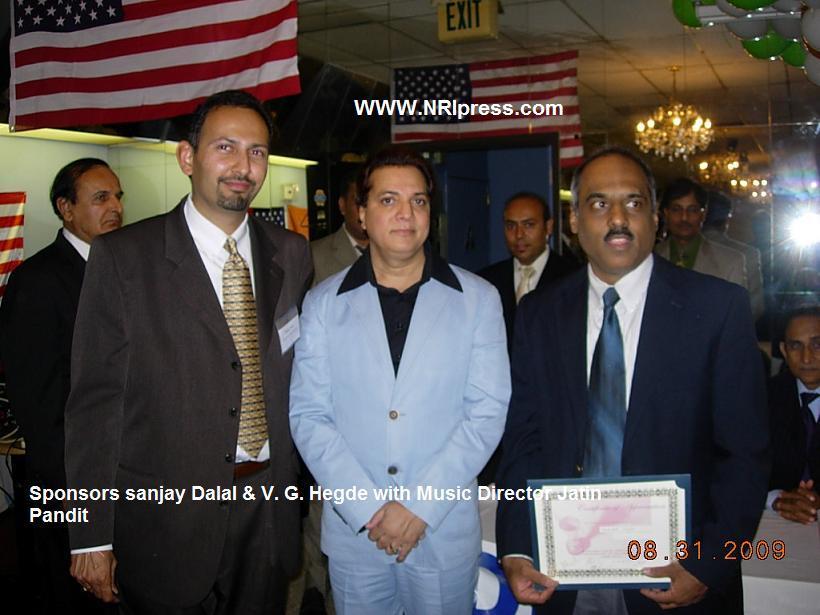
Sunday August 31, 2008
Dear FIA Members, Guests and Friends:
I am indeed honored to represent my business, Innovation Index Group, today on our national Independence Day celebration. I am the president of Innovation Index Group. I am humbled that FIA gave me this opportunity, and am quite grateful to the FIA executive team, Prakash Pancholi, Amrit Bhandari, Dilip Butani, Mohan Sharma, and members of this key organization.
Today I stand before you very proud of our heritage, of our parent country
I have my parents to thank who gave me the opportunity to come to
Today, in LA County alone, we have tens of thousands of kids who live in foster families. There are more than 600 children currently waiting for an adoptive family. I invite you to contribute your time and money to help these children through the KidSave organization based in
Another organization based in
Today, at the local Jain Center, thousands of Jains are celebrating Pajyushana, and asking for forgiveness and simultaneously forgiving fellow friends and workers. Yesterday, I attended a peaceful event hosted by Swaminarayan mandir and
We now live in the great democracy
We, all of us, are quite blessed by God. Let us take a moment to thank our parents, our family, our friends, our colleagues at work, our partners, our neighbors, our community and our country. We all have a nice house to live, drive good cars, do not have to worry about food, are healthy and do well financially. So, let us make a promise to ourselves today: We must not complain.
Thank you everyone for giving me this opportunity to speak. I am indeed grateful.
God Bless us all!
Sanjay Dalal
President & Managing Director
Innovation Index Group, Inc.
Thursday, July 17, 2008
Airline Revenue Management in India - one price to rule them all
 I have been enjoying my regular email and phone exchanges with Ram Badrinathan of PhoCusWright on the online travel market in Asia. Our last few chats have been on the Indian travel market because 2008 has been such a boom year for the industry there and he recently put together a special report on the region.
Yesterday he sent me through this fascinating screenshot from a Cleartrip flight price tracking graph. It shows over a three week period the prices for flights from Mumbai to Chennai. The different colours show the different airlines (ie Black is Spicejet with the cheapest price and Red is Magenta is Kingfisher with the most expensive).
The reason this is fascinating is that there is virtually no change in price regardless of the departure date. Each of the airlines has effectively set themselves price for the flight regardless of day of week, day of departure, competitors price or days out from departure. Revenue management has been thrown out the window and replaced with a single price strategy. Badrinathan contrasts this to October 2007 when he was putting together his report. During this time he noticed wild variations in pricing including dramatic decreases in price the closer customer's booked to the date of departure. Clearly the industry is trying to find a strategy to mitigate against the exploding costs of fuel. It has swung from constant and almost irrational change to no change.
You have to believe that the best strategy for an airline to survive staggering fuel costs would be to improve and increase revenue management activity rather than to adopt a one price to rule them all approach. Thanks to Ram for sending this through.
Tuesday, July 1, 2008
Expedia and TravelGuru - the deal is going to happen

A post yesterday on Expedia investing in TravelGuru was followed up by an update with a very undenial worded denial from TravelGuru. A source tells me that both parties are deep in negotiation and have either signed or are at least sharpening the pencils and lining up the celebratory streamers. Still no word on final valuation number but we can assume that the eLong experience is driving Expedia to be very conservative.
A deal is never over until the fat lawyer sings but if rumours are right then I can hear the light sounds of legally trained vocal chords warming up.

Monday, June 30, 2008
Rumour - Expedia buys into India with $17million investment in TravelGuru - is there a scary eLong parallel here
 contentSutra has a story (in conjunction with VCCircle) that Expedia has spent $17mm to gain a stake in the number four indian player TravelGuru. Intial reports put the valuation at around $30 million giving Expedia a majority stake. An update in contentSutra puts the valuation at closer to $75mm - though the headline still claims that Expedia has a majority stake.
 UPDATE - CEO Ashwin Dameria has written to Medianama.com with the following comment
I’m disappointed that mere speculation is being published in the form of a “story”. Many people have called me based on this hearsay and what they have read online.He does not say "no negotiations are under way" or "no chance". Rather says "no deal signed". Assuming there is a deal - here is my analysis.
There are many inaccuracies in these reports – the biggest being – there has been no deal signed! (my emphasis)
What more is there to deny?
Warm regards,
Ashwin
I did a background piece on the India market a few months ago. In researching that piece it became clear that TravelGuru was very well funded - having raised as much as $25mm from Sequoia and Battery. First round was $10mm with just Sequoia and then a combined Sequoia and Battery second round of $15mm. TravelGuru has used some of this to do acquisitions of their own picking up Desiya for around $25 mm (Rs. 100 crores). While well funded and used to acquisitions, the research put TravelGuru in fourth place in the market with around $80mm in TTV planned for 2008 (up from $42 in 2007). This puts them behind Makemytrip on around $280 TTV, Yatra on $210 and Cleartrip (>$100). More in this post here.
I am trying to understand this play by Expedia. Using acquisition as an market entry technique is not typical Expedia behaviour (on the leisure side). Of course in France there was the original joint venture with SNCF and there have been a string of investments by TripAdvisor. But the entry of the Expedia brand into a market has usual followed a organic path of launch hotel/destination services while the air engine is localised. Then a year or so after brand launch they bring on the air engine and ramp up the marketing. In the case of India with have the hotel only launch of Expedia.co.in and then four months later the investment - but not full buyout - of a local player. The obvious and scary parallel for Expedia is their entry into the Chinese market through a majority investment in eLong (August 2004). This has proven to be a disaster for Expedia. eLong is onto its third CEO since the investment (fourth if you include the interim work of Expedia Asia Pacific President Henrik Kjellberg) and the stock is near a two year low of around $7 only just above the investment price of $6.21 (though it would be fair to say that I should keep comments about poorly performing online travel stocks to a minimum). Much like eLong and its market standing compared to ctrip, TravelGuru currently lives in the shadow of larger rivals.
It has taken Expedia 4 years to ready themselves for another part investment in an emerging market. I am sure they are hoping that they have learnt a lot from the lessons of eLong.
Just a rumour at present as the CEO TravelGuru Ashwin Dameria has (sort of) issued a denial. Either way - the Indian market is continuing to heat up.
Tuesday, May 6, 2008
In India the $2billion online market is creating an industry: discussing India online with Ram Badrinathan of PhoCusWright
I have been meaning to write for a while of my experiences in India India  Makemytrip (the number one player) has a new engine and claims to be hitting break even at the end of this year. This is off the back of some $40mm in funds raised, US$280mm in gross bookings and a claimed 45% share of the OTA part of the market according to CEO Deep Kalra (who is already talking up IPO plans);
 Yatra (founded by ex-Ebookers Dhruv Shringi (CEO) and Manish Ami) raised money from Reliance Capital, Promod Haque’s Norwest Venture Partners (NVP), and the Television 18 Group (story here). Now there are stories of them combining with the Indian unit of Carlson Wagonlit Travel to try and acquire its Kuoni’s Indian business travel arm, Hogg Robinson Sita. They are claiming US$210mm in gross bookings;
 Not to be left out of the PR war – Cleartrip CEO Sandeep Murthy is claiming that Cleartip is the “leading OTA in India” on the back of a usability and user friendliness survey from a research organization. They also recently raised more money ($18.5mm) from big names Draper Fisher Jurvetson and Mahindra Group. Makes a total of $30.2mm raised to date; and
 Travelguru went on the acquisition trail – picking up Desiya for around $25 mm (Rs. 100 crores). Is aiming for break even in 2008 also on the back of $80mm in TTV ($42mm last year)
 India
 Makemytrip (the number one player) has a new engine and claims to be hitting break even at the end of this year. This is off the back of some $40mm in funds raised, US$280mm in gross bookings and a claimed 45% share of the OTA part of the market according to CEO Deep Kalra (who is already talking up IPO plans);
 Yatra (founded by ex-Ebookers Dhruv Shringi (CEO) and Manish Ami) raised money from Reliance Capital, Promod Haque’s Norwest Venture Partners (NVP), and the Television 18 Group (story here). Now there are stories of them combining with the Indian unit of Carlson Wagonlit Travel to try and acquire its Kuoni’s Indian business travel arm, Hogg Robinson Sita. They are claiming US$210mm in gross bookings;
 Not to be left out of the PR war – Cleartrip CEO Sandeep Murthy is claiming that Cleartip is the “leading OTA in India” on the back of a usability and user friendliness survey from a research organization. They also recently raised more money ($18.5mm) from big names Draper Fisher Jurvetson and Mahindra Group. Makes a total of $30.2mm raised to date; and
 Travelguru went on the acquisition trail – picking up Desiya for around $25 mm (Rs. 100 crores). Is aiming for break even in 2008 also on the back of $80mm in TTV ($42mm last year)
 - COD bookings to combat low credit card penetration;
- marketing campaigns around rebating customers if flights are delayed; and
- trying again and again to find a way for mobile bookings to work.
Wednesday, March 26, 2008
Historic Day For Indian Business - Tata acquires Jaguar, Land Rover from Ford
 March 26, 2008 will forever be a historic day for India Inc., India, and the Indian Business.
Tata today acquired two of the most celebrated, royal and revered auto brands in the history of automobiles - Jaguar and Land Rover - for $2.3 billion from Ford Motor company.
Tata Sons and Tata Motors chairman Ratan Tata, said, "We are very pleased at the prospect of Jaguar and Land Rover being a significant part of our automotive business. We have enormous respect for the two brands and will endeavour to preserve and build on their heritage and competitiveness, keeping their identities intact. We aim to support their growth, while holding true to our principles of allowing the management and employees to bring their experience and expertise to bear on the growth of the business."
Just hours after Tata issued a low-key announcement to confirm it had "entered into a definitive agreement with the Ford Motor Company for the purchase of Jaguar Land Rover, comprising brands, plants and Intellectual Property Rights", the top bosses of Unite, the UK's largest trades union, said the deal "is really good news for the UK automotive industry".Tata is poised to become a global brand with this acquisition of Jaguar and Land Rover. India Inc. will now enter the world of autos besides the world of software and steel.
The UK India Business Council, (UKIBC) the lead organization supporting the promotion of bilateral trade, business and investment opportunities between the two countries, said the deal was an outstanding example of the UK's open economy. Its Chief Executive Sharon Bamford said the purchase was in line with "many significant (cross-border) deals in recent years (namely) Vodafone's acquisition of Hutch and Tata's previous acquisition of Tetley and more recently Corus, are leading examples of this".
UKIBC Chairman Lord Karan Bilimoria said, "Tata's purchase of Jaguar and Land Rover is only the latest example of the newfound confidence of Indian companies. Less than two months ago I sat in the new Tata Nano, and I witnessed history in the making. Indian companies are growing more confident in the global economy, and with this deal the country is on the move like never before."
Related Articles:
Thursday, March 6, 2008
Expedia launches hotels and attractions in india.
 Announcement that Expedia has launched in India with Expedia.co.in. Much like their launches in Europe (except FR and DE) and Asia, the open functionality is just hotel and attraction. Business being operated by Sharat Dhall - Managing Director India. According to to his Linkedin profile Sharat joined Expedia in May last year. Prior to that he was a VP of eCommerce at the Indiatimes.com. Expedia is entering a market that is young but moving. Euromonitor predict a $2billion online market in India by 2010 but more than doubling every year. In the Expedia press release they say the Indian market has already reached that size.
Currently leaders in full service in India are Yatra, Makemytrip, Cleartrip and travelguru.
Travelcoity.co.in launched in India with flights and hotels in April last year headed up by Himanshu Singh MD - reporting through to the Zuji executive team (Travelocity's Asia Pac brand - except in India).
UPDATE - Ram Badrinathan of PhoCusWright made contact telling me that in his latest report on India PCW are estimating that the Indian online market will be $6 billion in 2010
Sunday, May 27, 2007
"Absolutely Red Hot" Growth in Indian Business: Ravi Venkatesan - Chairman Microsoft India - at TiEcon 2007
Ravi Venkatesan is the chairman of Microsoft India, and is responsible for Microsoft's marketing, operational and business development efforts in India. Venkatesan provides a single point of leadership for Microsoft in all of India. Microsoft Corp. (NASDAQ: MSFT) is one of the top 20 innovators of The Innovation Index.
Venkatesan delivered a keynote presentation at the recently concluded TiEcon 2007 in Santa Clara, California and shared with the audience of entrepreneurs, CEOs and venture capitalists the opportunities for growth and innovation in India.
And why not? The current annual Indian GDP growth is 9% and is showing no signs of slowdown, Indian business has unprecedented access to capital, Indian innovation and entrepreneurship is booming, Indian business is riding a wave of "incredible confidence", over 100 Indian corporations have market capitalization of over $1 billion, Indian IT exports are poised to grow 30% to 35% yearly, major multi-nationals have made multi-billion dollar investments in India, Indian manufacturing, retail, real estate and exports are becoming bell-weathers - Venkatesan calls this current state and growth of economy and business in India as "absolutely red hot."
Venkatesan believes there is abundant opportunity in every market sector that is facing big societal problems with "For Profit" business models. India is a "nation to be built" and hence is directing huge amounts of capital, resources and manpower to meet the needs of this unprecedented growth that he compares to "19th century America".
Venkatesan outlined six major opportunities in industries that are showing the highest potential for growth and innovation in India since they have "huge societal problems":
1. Communications - led by mobile, broadband, VoIP, SMS and more by innovators such as Ambanis of Reliance and Bharati. The cell phone has become ubiquitous in India, and everyone from a businessman, taxi driver, to a vegetable "laari waala" is using cell phone for business and entertainment.
2. Energy - with growth in renewable energy, green energy, solar energy, nuclear power, and more led by innovators such as Tanti - who started with 2 windmills and has now grown his company into a major energy powerhouse.
3. Water - led by access to pure drinking water which is a huge healthcare problem in villages, especially when the cost of water is 11 rupees a bottle, and the cost of treatment from healthcare problems resulting from drinking adulterated water is growing.
4. Healthcare - with 100s of millions of people seeking better and longer health, a large segment of aging population, foreign residents seeking better healthcare solutions in India creating a new market of "medical tourism", led by corporations such as Apollo, Ranbaxy, Fortis and more
5. Agriculture - with new innovations in delivering fresh food and focus on end-to-end supply chain led by companies such as Reliance Fresh, and through access to micro-finance for Indian farmers and agriculture companies.
6. Education - with focus on English and IT, leadership and employability, skill gaps and K-12 - despite the high GDP growth, a large percentage of India is still illiterate and requires bold initiatives led by state and national government and private entrepreneurs. For instance, can education tutorials be delivered through cell phones as an online service, especially when cell phones are being used by the largest segment of the population.
Venkatesan quipped that the biggest problem Microsoft has is that a majority of the SMB and consumer market does not want to pay for software. He provided some examples on how Microsoft has used creativity, flexible service-based business model and customer focused solution approach to address some of the IT problems facing small business and pharmaceutical industry in Tirupur and Ahmadabad.
Finally, Venkatesan provided four key takeaways for entrepreneurs who want to seize the Indian opportunity:
1. Address huge societal problems with For-Profit business models and focus on your most significant challenge, and "inclusive growth."
2. Don't forget entrepreneurship 101 - obsess about your consumer or the customer, and do rigorous thinking.
3. "Think Big, Start Small, Scale Fast" - Venkatesan quoted Mukesh Ambani's mantra of growth that every entrepreneur should follow.
4. Talent. Talent. Talent. Hire the best and the smartest people who have a strong sense of purpose and believe in the larger mission of the company.
Venkatesan's presentation style was extemporaneous and to the point, without any slides, straight from the gut. His experience with the Indian industry was without a doubt. His poise, panache, and no-nonsense conviction made for an audience of entrepreneur believers who couldn’t wait to hop on to the next plane to India in search of new opportunities.
Also check:
Innovation and Leadership lessons from Meg Whitman, eBay CEO and President, and top Innovator
Innovation Lessons from the Top Innovators and 13-year old CEO at TiEcon 2007
TiEcon 2007 was hosted by TiE – The Indus Entrepreneurs at the Santa Clara convention center.
And past articles on innovations and growth in India:
Venkatesan delivered a keynote presentation at the recently concluded TiEcon 2007 in Santa Clara, California and shared with the audience of entrepreneurs, CEOs and venture capitalists the opportunities for growth and innovation in India.
And why not? The current annual Indian GDP growth is 9% and is showing no signs of slowdown, Indian business has unprecedented access to capital, Indian innovation and entrepreneurship is booming, Indian business is riding a wave of "incredible confidence", over 100 Indian corporations have market capitalization of over $1 billion, Indian IT exports are poised to grow 30% to 35% yearly, major multi-nationals have made multi-billion dollar investments in India, Indian manufacturing, retail, real estate and exports are becoming bell-weathers - Venkatesan calls this current state and growth of economy and business in India as "absolutely red hot."
Venkatesan believes there is abundant opportunity in every market sector that is facing big societal problems with "For Profit" business models. India is a "nation to be built" and hence is directing huge amounts of capital, resources and manpower to meet the needs of this unprecedented growth that he compares to "19th century America".
Venkatesan outlined six major opportunities in industries that are showing the highest potential for growth and innovation in India since they have "huge societal problems":
1. Communications - led by mobile, broadband, VoIP, SMS and more by innovators such as Ambanis of Reliance and Bharati. The cell phone has become ubiquitous in India, and everyone from a businessman, taxi driver, to a vegetable "laari waala" is using cell phone for business and entertainment.
2. Energy - with growth in renewable energy, green energy, solar energy, nuclear power, and more led by innovators such as Tanti - who started with 2 windmills and has now grown his company into a major energy powerhouse.
3. Water - led by access to pure drinking water which is a huge healthcare problem in villages, especially when the cost of water is 11 rupees a bottle, and the cost of treatment from healthcare problems resulting from drinking adulterated water is growing.
4. Healthcare - with 100s of millions of people seeking better and longer health, a large segment of aging population, foreign residents seeking better healthcare solutions in India creating a new market of "medical tourism", led by corporations such as Apollo, Ranbaxy, Fortis and more
5. Agriculture - with new innovations in delivering fresh food and focus on end-to-end supply chain led by companies such as Reliance Fresh, and through access to micro-finance for Indian farmers and agriculture companies.
6. Education - with focus on English and IT, leadership and employability, skill gaps and K-12 - despite the high GDP growth, a large percentage of India is still illiterate and requires bold initiatives led by state and national government and private entrepreneurs. For instance, can education tutorials be delivered through cell phones as an online service, especially when cell phones are being used by the largest segment of the population.
Venkatesan quipped that the biggest problem Microsoft has is that a majority of the SMB and consumer market does not want to pay for software. He provided some examples on how Microsoft has used creativity, flexible service-based business model and customer focused solution approach to address some of the IT problems facing small business and pharmaceutical industry in Tirupur and Ahmadabad.
Finally, Venkatesan provided four key takeaways for entrepreneurs who want to seize the Indian opportunity:
1. Address huge societal problems with For-Profit business models and focus on your most significant challenge, and "inclusive growth."
2. Don't forget entrepreneurship 101 - obsess about your consumer or the customer, and do rigorous thinking.
3. "Think Big, Start Small, Scale Fast" - Venkatesan quoted Mukesh Ambani's mantra of growth that every entrepreneur should follow.
4. Talent. Talent. Talent. Hire the best and the smartest people who have a strong sense of purpose and believe in the larger mission of the company.
Venkatesan's presentation style was extemporaneous and to the point, without any slides, straight from the gut. His experience with the Indian industry was without a doubt. His poise, panache, and no-nonsense conviction made for an audience of entrepreneur believers who couldn’t wait to hop on to the next plane to India in search of new opportunities.
Also check:
Innovation and Leadership lessons from Meg Whitman, eBay CEO and President, and top Innovator
Innovation Lessons from the Top Innovators and 13-year old CEO at TiEcon 2007
TiEcon 2007 was hosted by TiE – The Indus Entrepreneurs at the Santa Clara convention center.
And past articles on innovations and growth in India:
Made in India - Innovations in Software Operations at the Top Innovators
Tuesday, March 13, 2007
Asian online travel numbers from Euromonitor
When talking growth projections - happiness is a low base. M-travel.com and HotelMarketing.com are reporting on numbers out from Euromonitor stating that India is the fastest growing online travel market in Asia- and by reporting growth numbers of 271.6% between now and 2010, presumably the world also. Parita Chitakasem of Euromonitor says that the Indian travel market will be worth US$2b in 2010.
270% plus growth in 4 years sounds fantastic but we need to put $2billion in perspective. The US market in 2006 was in the range of US$70-80mm depending on who you believe, poor cousin Australia is currently in the US$3-4billion range and PhoCusWright put Japan at close to $5billion.
Also it is very important when looking at online market size projections to understand exactly what is meant by online. You would expect that online should mean the whole transaction is completed with only the use of fingers, keyboard, mouse, Internet connection and credit card number. However a lot of markets and researchers include web referred bookings (started online but concluded on the phone/in a store) and pure call centre sales. The latter is especially the case in Chinese numbers.
That all said, US$2billion is a good market size. Though the market seems incredibly daunting with a billion plus people combined with complicated (and often inconsistent) regulation and technology requirements there is the attraction that the main markets both in terms of cities and demographics (ie middle to upper classes) are quite concentrated.
UPDATE - Jared at the Online Travel Review has a nice piece here on the Indian online travel market
270% plus growth in 4 years sounds fantastic but we need to put $2billion in perspective. The US market in 2006 was in the range of US$70-80mm depending on who you believe, poor cousin Australia is currently in the US$3-4billion range and PhoCusWright put Japan at close to $5billion.
Also it is very important when looking at online market size projections to understand exactly what is meant by online. You would expect that online should mean the whole transaction is completed with only the use of fingers, keyboard, mouse, Internet connection and credit card number. However a lot of markets and researchers include web referred bookings (started online but concluded on the phone/in a store) and pure call centre sales. The latter is especially the case in Chinese numbers.
That all said, US$2billion is a good market size. Though the market seems incredibly daunting with a billion plus people combined with complicated (and often inconsistent) regulation and technology requirements there is the attraction that the main markets both in terms of cities and demographics (ie middle to upper classes) are quite concentrated.
UPDATE - Jared at the Online Travel Review has a nice piece here on the Indian online travel market
Monday, March 5, 2007
The Growing Global Indian Innovation
Indian Americans are the top entrepreneurs among immigrant groups in the United States, and in setting up the largest number of engineering and technology companies over the past decade. Indian Americans account for 26 per cent of tech firms founded by immigrants as a whole. Eglis Milbergs, president of the Center for Accelerating Innovation, in this article touts the Duke University study wherein the biggest concentration of Indian entrepreneurs was found in California, Texas and New Jersey.
Ajay Singh Niranjan of The Great Human Capital believes that a brave new world beckons Indian Innovators and Entrepreneurs, and lots of opportunities exist for innovation and entrepreneurship to thrive in India, especially in areas such as technology, health care, education, rural marketing and social services.
In this article, Wipro's Innovation process is outlined in an interview with K.S. Viswanathan, chief-executive of sales at Wipro India.
Viswanathan states that "We (Wipro) have three types of innovation: technology innovation, process innovation and delivery innovation....At the apex end, we have an IT management council, where normally all decisions about breakthrough innovations or quantum innovations are taken....To assist the IT management council, we have an IT innovation council, where we go through four gates before an IT project gets done."
At Wipro, 5% of the total revenue of $3 billion comes from innovation projects according to Viswanathan. And to top it off, Azim Premji, CEO, gets involved in key innovative projects. Viswanathan says "Azim Premji has said that so many dollars of revenue per year are earmarked for innovative projects, largely for quantum innovations and those that lead to process innovations."
Arun Kottolli, a Management Consultant who maintains his own blog provides key advantages towards investing in India. Kottolli affirms that "India has now regained its innovative spirit. As a result, creativity can be seen in all walks of life in India. Indian companies have discovered the benefits of innovation and creativity.....Creativity in India can be seen in diversity of its languages, classical arts and music, literature, folk arts, construction etc."
One key metric: IBM, GE, Microsoft, Cisco, Intel and sixty other top innovating companies have already setup their R&D centers in India.
Kottolli believes that Indians tend to opt for cost effective innovation.
Kottolli is a prolific blogger, and in another article, talks about the Indian Style of Innovation and Intellectual Property Creation.
Innovation at Infosys is grounded in the intellectual capital and the processes to rigorously train the employees:
-->The company’ key competitive advantage has been the intellectual capital of its employees. - Infosys Annual report 2006
-->In India Infosys took that idea (from GE) to heart and created the world’s largest employee training facility.
In a separate article, Kottolli writes that the "Indian automobile industry has demonstrated resounding success of Indian innovation. Bajaj Auto created DTSI technology and designed Pulsar bike, Maini Group’s Reva, Mahindra’s Scorpio, Tata Motors created Sumo, Safari, Indica, 209, 407, and a slew of trucks."
John Hagel recently visited India, and wrote an article on the Innovation and Talent in the Indian IT Industry.
"As JSB and I have written, there is an opportunity to pursue “innovation blowback” strategies, using the Indian market as a catalyst for breakthrough innovation in products and services that can then be used to support global attacker strategies designed to challenge incumbents in the more developed Western economies.
The Indian IT services industry could fuel enormous growth for the Indian economy by more aggressively supporting these innovation blowback strategies.
Ultimately, the opportunity would be to become leaders in the formation and orchestration of creation networks. This would require mastering open innovation management techniques to attract and mobilize talent, focus the innovation initiatives across multiple participants and accelerate commercialization and learning from these initiatives.
There’s no shortage of opportunities at both the product and process level to drive the growth of Indian IT services companies."
Gautam Ghosh, a key blogger on Management Consulting, provides a reason on why Indian IT companies have not fully embraced product innovation: "Because software exports are not taxed and services within the country are, the incentive for developing IT products and services for Indian firms is low for the Indian IT service providers."
Bottomline:
When I visited India in 2006, I was "wowed" by the growth of local innovation on all industry fronts: pharma, healthcare, autos, equipment, manufacturing, financials, retail, education, IT and more – not just the BPO and KPO industries. The solid growth in Indian economy is fueling entrepreneurship, innovation and creativity from Indians in every industry. This growth is even attracting MNCs to establish their R&D, manufacturing and entrepreneurship centers in India. My favorite story is that of a Taxi Driver in India who drives an indigenous Tata Indica and conducts all the routes and business logistics by simply using SMS and click-to-talk on mobile phone. I was amazed as to how efficiently the Taxi business of over 100 taxis effectively ran using the mobile phone as a communications, logistics and business device. The Taxi Driver uses click-to-talk to signal to the Taxi dispatch service that his current route is coming to a close; the Taxi dispatch service locates the nearest new customer request to the current physical location on where the Taxi driver is; the Taxi dispatch service leverages GPS and Location software; the Taxi Driver gets an SMS from the Taxi dispatch service prompting him on where to go next with a link that provides a map if needed; the Taxi Driver goes to that location and finds the passenger; now, he simply uses Click-to-talk to signal that he has picked up the passenger and he is on the next route. Wow!
Living in Bay Area, one always has a strong awareness of the top Indian entrepreneurs in Silicon Valley and even in the U.S. Now, we are seeing the growth of entrepreneurship and innovation from Indians in India and all over the world.
I am planning to create a report on the top 10 Indian Innovators from around the world. The names of Azim Premji, N R Narayana Murthy, Lakshmi Nivas Mittal, Anil and Mukesh Ambani, Ratan Tata, Kushal Pal Singh, Sunil Mittal, Ramesh Chandra, Kumar Birla and Gautam Adani immediately come to mind. However there are many more. Vyomesh Joshi at Hewlett Packard who manages HP’s multi-billion dollar imaging business must be considered in this list. The criteria at a minimum should be the innovators creating lasting companies or business units of at least $1 billion in annual revenue, real disruption in the marketplace, establishing a global brand and currently in active role (or within the last year). I would call upon the many aforementioned writers to co-create and get inputs on this report on the top 10 Indian Innovators.
Subscribe to:
Posts (Atom)