Today, Google released Google Desktop 4, the next generation desktop search and information application for users. Building on a great thing, Google Desktop 4 added Google Gadgets - visually slick mini-applications that run on your desktop or in your sidebar for delivering specific topical information. We applaud our friends on the desktop team who continue to bring rapid innovation to the user experience in both the consumer and enterprise world.
But, along with the sizzle comes some of the more mundane features that you can't look at or touch (or move around your desktop), but are key to providing the highest quality, most secure information solution in the enterprise. With version 4 of Google Desktop, we have simplified and enhanced the security capabilities to help ensure that no information leaves your enterprise network. When Google Desktop introduced the Search Across Computers feature, there was concern about unintentional transmission of corporate information outside the corporate network. And although we offer group policy settings to fully disable the Search Across Computers feature for both enterprise and consumer versions of the product, we heard feedback from some business customers that they wanted an easier way.
Therefore, we're pleased to announce the Search Across Computer network disable feature. This allows network administrators to block a particular URL, at the network level, that will disable Search Across Computers entirely.
Our goal is to provide a great user experience while maintaining corporate security and conforming to your policies. So give the new Google Desktop 4 a spin, and thanks for all the great feedback.
Wednesday, May 10, 2006
Get site-targeted with quality, placement and size
As someone on the inside track for site targeting, the AdSense team asked me to share a word with you regarding what advertisers are most keen on when selecting sites for their site-targeted campaigns.
For advertisers -- and especially traditional brand marketers -- the name of the game is brand engagement and association. When purchasing ad space, advertisers focus on three elements of a website: quality of content, physical placement of the ad unit, and ad unit size.
1. Quality - Let's face it, advertisers are all about attracting user interest. When selecting places to advertise online, they look for sites that incorporate high quality and unique content in combination with good navigation, layout and features. It goes to reason that if users like the site, then advertising on these sites will build positive brand association or "positive brand karma".
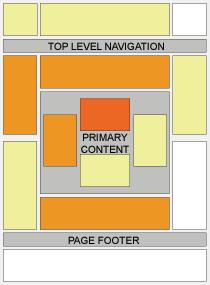
2. Placement - In site targeting, "above the fold" ad placements are important to advertisers because they're paying for these ads on a cost-per-thousand impressions (CPM) basis. Eye-tracking analysis has shown that users are more likely to engage with ad placements that appear in the upper left-hand corner of a page.

It's important to advertisers that when a page loads, people see and interact with the ad. The greater the level of user engagement, the higher advertisers are willing to bid to display on a site.
Opting into both text and image ads also helps, because it gives advertisers more options for what types of ads they can display on your site.
3. Size - In advertising, size does matter; bigger ads are more likely to be seen. The AdSense program offers many ad formats for you to use on your site. Among them, the 336 x 280 Large Rectangle, 300 x 250 Medium Rectangle, and 250 x 250 Square are the larger ad units and consequently, the ones advertisers most value. Average CPMs for these sizes are usually 300% higher than a typical 468 x 60 Banner ad.
Of course, incorporating these elements doesn't guarantee that your site will be site-targeted, but it can certainly increase the chances by making it more advertiser-friendly.
For advertisers -- and especially traditional brand marketers -- the name of the game is brand engagement and association. When purchasing ad space, advertisers focus on three elements of a website: quality of content, physical placement of the ad unit, and ad unit size.
1. Quality - Let's face it, advertisers are all about attracting user interest. When selecting places to advertise online, they look for sites that incorporate high quality and unique content in combination with good navigation, layout and features. It goes to reason that if users like the site, then advertising on these sites will build positive brand association or "positive brand karma".
2. Placement - In site targeting, "above the fold" ad placements are important to advertisers because they're paying for these ads on a cost-per-thousand impressions (CPM) basis. Eye-tracking analysis has shown that users are more likely to engage with ad placements that appear in the upper left-hand corner of a page.
It's important to advertisers that when a page loads, people see and interact with the ad. The greater the level of user engagement, the higher advertisers are willing to bid to display on a site.
Opting into both text and image ads also helps, because it gives advertisers more options for what types of ads they can display on your site.
3. Size - In advertising, size does matter; bigger ads are more likely to be seen. The AdSense program offers many ad formats for you to use on your site. Among them, the 336 x 280 Large Rectangle, 300 x 250 Medium Rectangle, and 250 x 250 Square are the larger ad units and consequently, the ones advertisers most value. Average CPMs for these sizes are usually 300% higher than a typical 468 x 60 Banner ad.
Of course, incorporating these elements doesn't guarantee that your site will be site-targeted, but it can certainly increase the chances by making it more advertiser-friendly.
Monday, May 8, 2006
CIO Insight Talks Enterprise Search With Google
The Executive Editor of CIO Insight Dan Briody recently interviewed Dave Girouard, VP & GM of Google Enterprise, about what Google is doing to improve search inside of business, what CIOs are asking for, and what's next. Read the full transcript of the discussion at CIO Insight.
Unobtrusive ads can boost revenue
Sharon Maguire expected that matching her Google ads to her site, dogbreedinfo.com, would give it a cleaner look and feel that her visitors would appreciate. What she didn't expect was the large revenue increase spurred by her changes -- AdSense revenue nearly doubled, to $650 per day.
When generating her ad code, Maguire chose a white background and white borders to blend her ads more effectively into her site's overall color scheme. "Originally I'd chosen the standard 'Mother Earth' palette with the thin outline of a border," Maguire said. "I was happy with performance, but could see the revenue potential of the ad units. I discovered by simply removing the border around the ad units the AdSense revenue doubled."
Before:

After:

Many publishers have found that visitors are more likely to see and click on Google ads when the ads themselves blend cleanly into a site. At the same time, the "Ads by Goooooogle" tagline clearly distinguishes the Google ads from the site content, so users aren't confused.
You can create a custom color palette to help combat "ad blindness" and increase your site's revenue potential. If you've already seen similar successes, please share your story with us.
When generating her ad code, Maguire chose a white background and white borders to blend her ads more effectively into her site's overall color scheme. "Originally I'd chosen the standard 'Mother Earth' palette with the thin outline of a border," Maguire said. "I was happy with performance, but could see the revenue potential of the ad units. I discovered by simply removing the border around the ad units the AdSense revenue doubled."
Before:
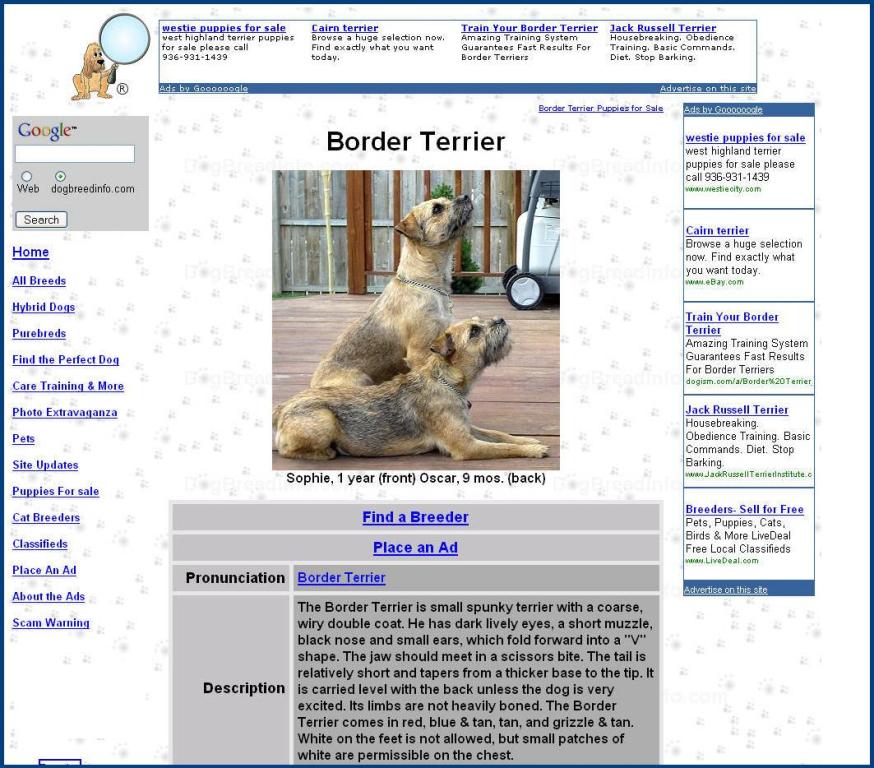
After:
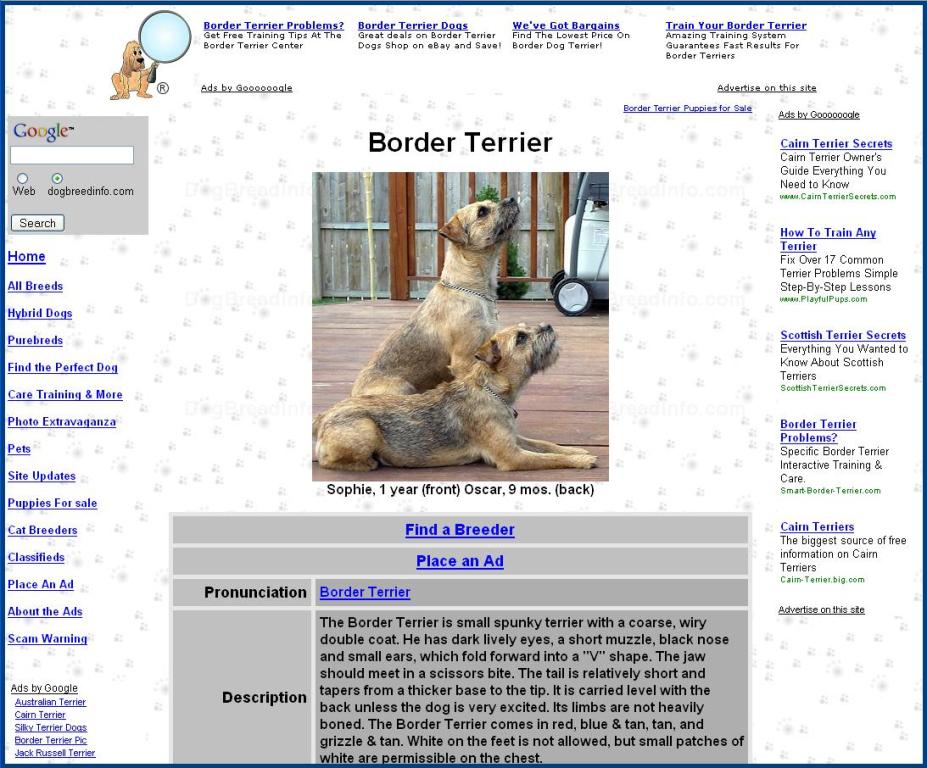
Many publishers have found that visitors are more likely to see and click on Google ads when the ads themselves blend cleanly into a site. At the same time, the "Ads by Goooooogle" tagline clearly distinguishes the Google ads from the site content, so users aren't confused.
You can create a custom color palette to help combat "ad blindness" and increase your site's revenue potential. If you've already seen similar successes, please share your story with us.
Sunday, May 7, 2006
Car Interior Detailing Products
Car Interior Detailing Products:
Windows
- Glass Cleaner
- Interior Anti-Fog Protectant
Dashboard
- Swifter Dust Cleaner
- Vinyl Protectant
Interior Plastics
- Plastic Cleaner
- Hard Plastic Polish
Leather
- Leather Cleaner
- Leather Conditioner
Carpets
- Odor Eliminator
- Stain Remover
- Carpet Cleaner
Regards,
Michael Kralj
You might also be interested to learn about Sump Pumps or Bidets.
Windows
- Glass Cleaner
- Interior Anti-Fog Protectant
Dashboard
- Swifter Dust Cleaner
- Vinyl Protectant
Interior Plastics
- Plastic Cleaner
- Hard Plastic Polish
Leather
- Leather Cleaner
- Leather Conditioner
Carpets
- Odor Eliminator
- Stain Remover
- Carpet Cleaner
Regards,
Michael Kralj
You might also be interested to learn about Sump Pumps or Bidets.
Subscribe to:
Posts (Atom)